
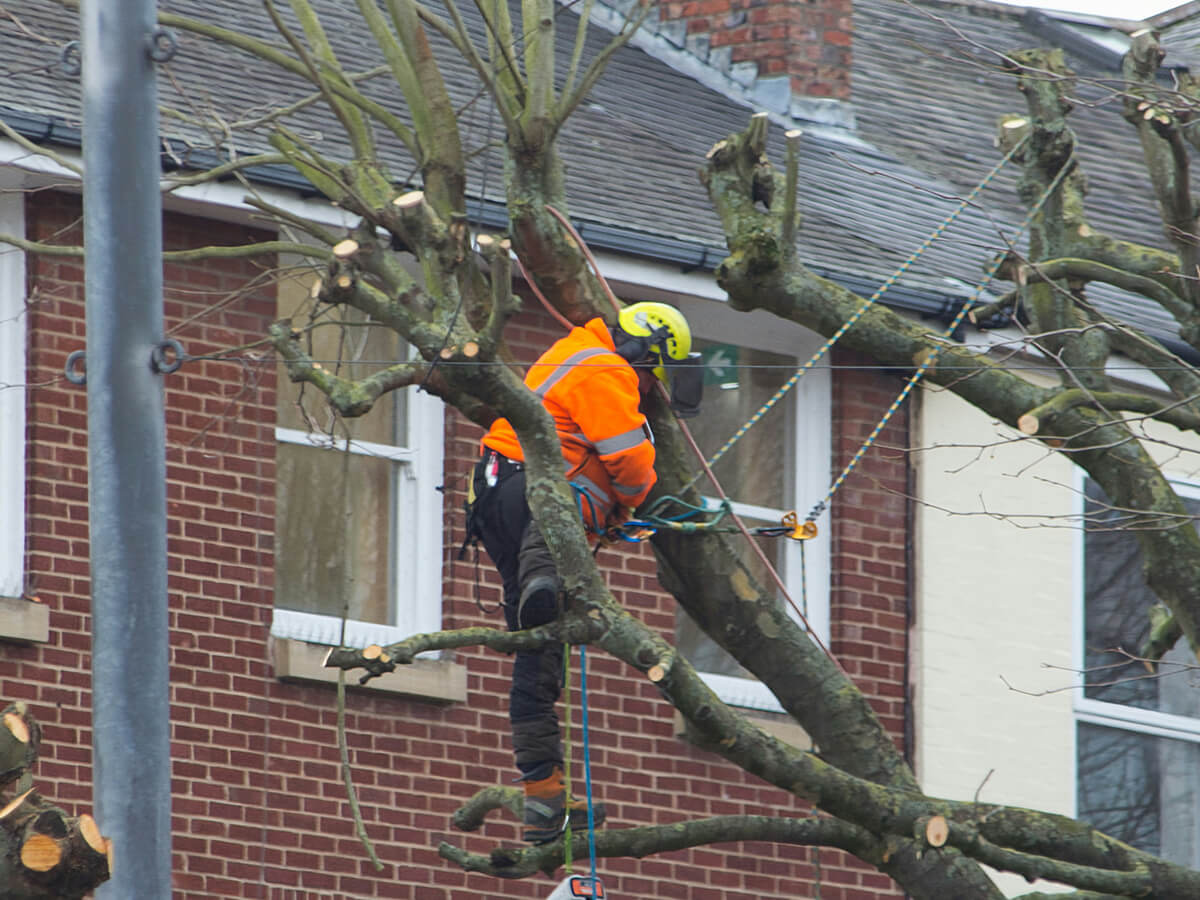
It can be easy to think of trees as self-sufficient, but the truth is that they very often need some support to stay standing. This situation can be especially true of old or injured trees (particularly ones that have survived rough, stormy weather). Heavy snow, freezing rain and strong winds can take their toll on a tree over the years, putting extra stress on branches that may have already taken damage and are therefore more prone to splitting.
Tree cabling is a common solution to this problem. A professional arborist can install cables around an unstable tree to correct conditions like split sections or co-dominant stems. Cabling and bracing after storms prevents further damage, and are themselves also common measures to keep them stable in the aftermath of strong wind and rain that can affect a tree’s stability.
Here’s a short list of questions to help determine whether your tree can do with cabling to help it stay stable.
1. What Is Tree Cabling?
Tree cabling involves the use of flexible cables (usually made of synthetic materials or steel) installed between major branches or stems in a tree’s upper canopy. The cables limit how far those limbs can move apart in case of wind, snow or ice loads (which then helps reduce strain on any weak, vulnerable unions). Cabling is often paired with bracing, in which threaded steel rods are set through a weak union in a low area of the tree for added rigidity. Together, these systems redistribute weight so no single point on these vulnerable branches carries the full load.
2. Which Trees Are Most Likely to Need Cabling?
Trees with codominant stems are a typical at-risk tree for failure. A codominant stem consists of two similarly-sized trunks that grow out of the same point. These unions tend to grow into a tight V shape that traps the bark between the stems. This is known as included bark, and this juncture creates a weak attachment. Large, heavy limbs extending over a roof, driveway or play area will also benefit from support to avoid falling and causing damage. In general, tree species that feature brittle wood or dense canopies can be at greater risk as well to provide additional support for their limbs.
3. What Warning Signs Should You Look For?
Trees don’t just stand there without telling you there’s a problem. There are plenty of signs of stress and damage in a tree, giving you warning of the existence of a problem. The trick is knowing what to look for and how to identify it. Cracks or splits forming where two stems meet are a clear sign that a union is under stress. Meanwhile, limbs that sag more than they used to, or a canopy that leans heavily to one side, also deserve attention. Creaking sounds during windy weather are an auditory warning sign of movement at a weak junction.
4. Can Cabling Save a Tree That Is Already Damaged?
Cabling works best as a preventive measure on trees that are otherwise healthy. However, a tree with extensive decay, a large trunk cavity or significant root damage may not be a good candidate; cables reinforce a tree’s existing strength, but cannot restore lost strength themselves. An arborist may combine cabling with pruning to reduce weight on stressed limbs. If the tree poses a serious risk to people or structures, removal may be the safer option; take a close look to determine if your tree merits removal.
5. How Is Cabling Installed?
An arborist typically starts by inspecting the tree to identify weak unions and choose a suitable system. Cables are typically anchored roughly two-thirds of the way from a weak union to the ends of the limbs. Static systems use steel cable to restrict movement firmly, while dynamic systems use synthetic rope that allows some natural sway.
6. Does a Cabled Tree Need Ongoing Care?
A cabling system is not a one-time fix. Trees continue to grow, so hardware may need adjusting to prevent it from cutting into bark or losing tension. Annual inspections, along with checks after severe storms, help confirm that cables and anchors remain secure. Routine pruning and general tree care also help the system do its job.
Storms are never to be taken lightly, especially when it concerns your trees. Indeed, fallen trees due to storms can be major hazards to their surroundings, as many stories can attest. Cabling is an effective method of mitigating that damage, allowing you to extend the life of a valuable tree while you’re at it. However, it’s worth noting that it isn’t the right solution for every tree (hence why it’s so important a professional assessment takes place to determine if cabling and bracing are the right move for your tree). A certified arborist can determine whether your tree is a candidate and recommend the right support for its size, species and condition.
Need a hand with your tree-related tasks at home? Dave Lund Tree Service provides full arborist services, and that lets us assess your trees and recommend the right support to keep them standing strong through every season. Call us now at (905) 884-0511 to book an assessment and give your tree the care it deserves.
Frequently Asked Questions
1. Does Tree Cabling Harm the Tree?
When the installation is done correctly (meaning by a trained arborist), cabling is intended to cause minimal harm to the affected tree. Some systems do require the drilling of small holes to install hardware, which the tree can grow over in time. Dynamic cabling systems wrap around limbs instead, and involve no drilling.
2. How Long Does a Cabling System Last?
Lifespan depends on the materials used and how quickly the tree grows. Steel systems generally last longer than synthetic ones, which may need replacement sooner. Regular inspections help determine when parts need adjusting or replacing.
3. Can I Install Tree Cables Myself?
Many tree-related tasks are best left to a professional arborist, and cabling is one of them. Incorrect placement or tension can weaken the tree further or cause the system to fail. Working at height in a tree also carries serious safety risks.
4. When Is the Best Time to Cable a Tree?
Cabling can be done in most seasons. Having it done before winter is ideal, as the timing helps prepare trees for snow and ice loads. An arborist can also spot weak unions more easily when leaves have dropped.
5. Will Cabling Stop My Tree From Growing?
No. Cabling supports weak areas without restricting normal growth. The tree continues to develop, which is why hardware needs periodic checks and adjustments.