
Now that we’re well and truly in the middle of winter, it’s the time more than a few homeowners kick back and take it easy. Your yard work can easily wait ‘til spring; now’s the time to curl up in front of the fire and enjoy a nice, hot drink over what’s left of the holiday season. However, for the trees standing in your yard, the most challenging season hasn’t ended just yet. Winter isn’t just a hibernation period for your trees; it’s actually a rigorous test of endurance. It’s rather more of a survival game played against the elements, where the stakes are the long-term vitality and structural integrity of your landscape.
To many homeowners, trees are self-sufficient giants more than capable of weathering any storm just fine on their own. While trees are resilient, the urban environment does present some unique challenges that strip them of their natural defences. Without intervention, trees can suffer from cumulative stress which can lead to permanent decline (a slow, often irreversible deterioration of health that may not manifest fully until years later). To ensure your trees survive and thrive all year round and not just during the winter, it’s vital you adopt a strategic approach to their care. Here are some essential strategies to help your trees win that survival game.
Understanding the Winter Battlefield
To protect your trees, you must first understand the specific threats they face during the cold months, and equip yourself with some winter tree care know-how to ensure you give your trees the attention they need. It is rarely the cold air alone that kills a tree; rather, it is a combination of physical and physiological stressors.
1. Desiccation and Winter Burn
One of the most insidious threats to evergreens is desiccation. On a sunny winter day, the wind and sun accelerate transpiration, which causes the tree’s needles to lose moisture. However, because the ground is frozen solid, there’s no way for the root system to draw up water to replenish this loss. The result is winter burn, characterized by browning needles and dieback. This is dehydration on a massive scale, and for a tree, it can be fatal if its moisture reserves are depleted beyond recovery.
2. Fluctuating Temperatures and Sunscald
Winter isn’t a static block of cold; it’s really a rollercoaster of temperatures. Bright sunlight reflecting off snow can heat the bark of a tree during the day, stimulating activity in the cells just beneath the surface. When the sun sets and temperatures plummet rapidly, this active tissue freezes and dies. This results in sunscald (also known as southwest injury for the direction these injuries usually follow) visible as vertical cracks or dead patches on the trunk. Young trees with thin bark are particularly vulnerable to this form of thermal shock.
3. Physical Trauma from Ice and Snow
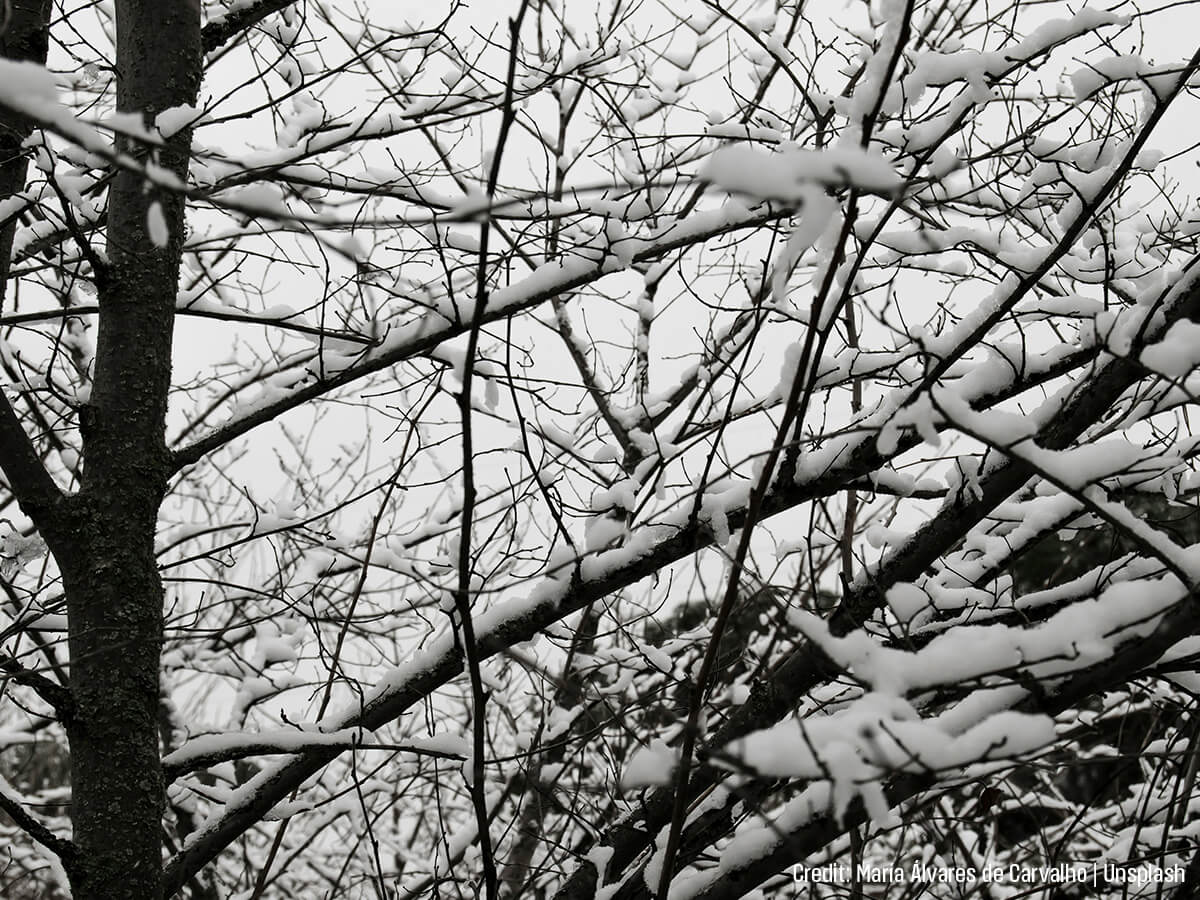
The sheer weight of accumulated snow and ice can exert tremendous force on tree limbs. A single ice storm can snap branches that have had decades to grow, crashing with tremendous force on anything below the tree and leaving open wounds that invite disease and decay. While native trees are adapted to snow loads, the heavy, wet snow common in late winter can exceed the structural capacity of even the healthiest oak or maple, especially if the tree has poor branch architecture.
4. The Chemical Warfare of Road Salt
In our quest for safe driveways and roads, we often utilize de-icing salts. Unfortunately, sodium chloride is toxic to trees. Salt spray from passing vehicles can damage buds and branches, while salt runoff infiltrates the soil, displacing essential nutrients and preventing roots from absorbing water—a phenomenon known as “physiological drought.”
The Pre-Game Strategy: Late Autumn Preparation
Winning the survival game that is winter often requires preparation before the first heavy snowfall. Your actions in late autumn set the baseline for your tree’s resilience.
5. The Deep Watering Regimen
Hydration is the single most critical factor in winter survival. Before the ground freezes, ensure your trees enter dormancy fully hydrated. Always spend the late autumn (through late October and November in particular) conducting a deep watering regimen, continuing until the frost penetrates the soil. Deep watering is key here. Apply water slowly, allowing it to soak 30 to 45 centimetres deep into the root zone. A general rule is to apply approximately 40 litres of water for every 2.5 centimetres of trunk caliper. This creates a moisture reservoir that acts as a buffer against winter desiccation.
6. Correct Mulching Mechanics
Mulch is like a winter coat for a tree. A proper layer of organic mulch insulates the soil, moderates temperature fluctuations, and retains moisture. Apply a layer of wood chips or shredded bark 5 to 10 centimetres thick around the base of the tree, extending as far out to the drip line (the edge of the canopy) as possible. However, take care to avoid volcano mulching, which consists of piling your mulch high against the trunk. Mulching in this manner actually traps moisture against the bark, encouraging rot and providing a hiding place for rodents. Instead, create a doughnut shape, leaving a few centimetres of clear space around the trunk itself.
7. Strategic Sanitation and Inspection
Late autumn is an ideal time to remove the “weak links.” Inspect your trees for dead, diseased, or broken branches and remove them. These compromised limbs are the first to fail under snow load, potentially crashing down on property or tearing healthy bark as they fall. However, avoid heavy pruning of live tissue at this time, as pruning wounds may not heal before the deep freeze, leaving the tree exposed. Keep your focus at this time solely on sanitation and safety.
Defensive Manoeuvres: Mid-Winter Protection
Once winter sets in, your strategy shifts from preparation to active defence. These physical barriers and maintenance habits are vital for vulnerable specimens.
8. Physical Barriers and Trunk Wrapping
Knowing how to plant a tree takes more than digging a hole and setting your tree up. For young, thin-barked trees (such as maples and lindens) and newly planted specimens, the planting process isn’t done until you provide them some physical protection as well. Wrap the trunks with a commercial tree wrap or a white plastic tree guard. This reflects sunlight and keeps the bark temperature consistent. For evergreens prone to windburn, consider erecting a burlap screen. Drive stakes into the ground roughly 30 centimetres from the tree and wrap burlap around the stakes—not the tree itself. This barrier breaks the wind and shades the foliage without crushing the branches or trapping excess moisture.

9. Managing Snow Loads
When heavy snow accumulates on hedges or prized ornamental trees, the instinct is often to shake the branches vigorously. This is a mistake. Frozen wood is brittle and snaps easily. Instead, use a broom to gently brush the snow upward and off the branches. If the snow is frozen hard or encased in ice, do not attempt to remove it. Attempting to chip away ice will almost certainly damage the bark or break the limb. In these cases, patience is the only strategy; wait for a natural thaw to melt the burden.
10. Rodent and Pest Deterrence
When food becomes scarce, mice, voles, and rabbits turn to nutrient-rich tree bark for sustenance. They can girdle a tree (which consists of chewing a ring around the trunk that cuts off the flow of nutrients) effectively killing it. To prevent this, ensure your tree guards extend from the ground up to at least 60 centimetres high, or above the anticipated snow line. If deep snow allows rabbits to reach higher, you may need to re-adjust your protection or use wire mesh cages.
The Post-Game Recovery: Spring Assessment
As the snow melts and the ground thaws, the game enters its final phase: recovery. This is where you assess the toll winter has taken and help your trees transition back into active growth.
11. Soil Remediation and Salt Flushing
If your trees are located near a road or driveway where salt was used, the soil likely contains high levels of sodium. As soon as the ground thaws and drains, flush the area with heavy amounts of fresh water. This helps leach the salts down below the root zone. You may also consider applying a thin layer of compost or a soil amendment specifically designed to neutralize salt damage, helping to restore the chemical balance necessary for root uptake.
12. The Final Inspection
Walk your property and inspect trees for cracks, splits, or animal damage that occurred over the winter. Even small cracks can cause serious problems, and so it pays to be vigilant and take every crack seriously. If you find bark that has been chewed or split, carefully trim away the loose, ragged edges with a sterile knife to allow the wound to seal over cleanly (a process called tracing). Do not apply wound paint or tar, as these interfere with the tree’s natural healing processes. If you notice significant dieback in the canopy, wait until the leaves fully emerge before pruning; this ensures you are only removing dead wood and not dormant branches that are slow to wake up.
Winter care for your trees is an absolute necessity, for ensuring they come through winter ready for a strong start in spring as for preventing a permanent decline to their health and appearance. By taking these steps over the winter, you help bolster your trees’ natural defences against the Canadian climate. A more proactive approach to your tree care goes a long way to helping them withstand the freeze and emerge in spring with their health, structure, and vitality fully intact.
Ensure your trees get the care they need to make it through the year with a little help from Dave Lund Tree Service. We are a full service arborist with a wealth of experience caring for trees like yours, and we’re happy to put that expertise at your service. Call (905) 884-0511 today and give your trees some TLC.