Trees are a boon for any home and any homeowner. Not only are they striking elements of your landscape to give your curb appeal a boost, but they also provide shade, privacy, and a place for local wildlife to gather. As homeowners, it’s only natural to give your tree the care it deserves, but sometimes our best intentions can often be guided by outdated advice and harmful myths. This “common knowledge” is often the root cause of sick, dying, or dangerous trees.
Of all the harmful practices, one stands out as the most visible and destructive: tree topping. This is the indiscriminate cutting of the top of a tree, often to reduce its height. It is not a pruning method; it is an amputation that cripples the tree for life.
Your trees are complex, living systems, not lawn furniture you can just cut down to size. To truly protect your investment and ensure your trees live a long, healthy life, it’s crucial to separate fact from fiction and understand how proper tree pruning should look. Let’s debunk the four most destructive pruning myths that are harming your trees.
1. Myth: “Topping a tree is the best way to control its size.”
This is one of the most damaging myths in arboriculture. Many homeowners often ask for topping when a tree gets “too big,” fearing it will fall on the house if anything should happen. Ironically, topping can actually contribute to that very outcome.
The Reality: Topping, or “lopping,” involves cutting large branches and the main trunk (or leader) at a uniform height, leaving large, unsightly stubs. A tree’s biology dictates its response to this trauma. First, it starves. By removing a massive portion of its leaves, you are removing its entire “food factory.” The tree must dip into its emergency energy reserves to survive.
Second, it panics. The tree desperately shoots out a dense cluster of thin, vertical branches called “watersprouts” or “suckers” from just below the cut. These new shoots are not a sign of health; they are a sign of stress. Unlike natural branches, which are anchored deep within the wood, these sprouts are weakly attached to the outer layer of the stub. As they grow rapidly—often several metres in one season—they become heavy and are extremely prone to snapping off in a windstorm or ice storm, creating a hazard far worse than the original tree. Furthermore, the large, flat wounds left by topping never seal properly, inviting decay and insects directly into the centre of the tree.
A proper reduction cut, in contrast, involves pruning a branch back to a strong lateral branch that is at least one-third the diameter of the one being cut. This approach is proper, healthy tree maintenance, respectful of the tree’s structure and its ability to grow naturally.
2. Myth: “You must apply pruning paint or sealant to large cuts.”
For decades, homeowners were told to slather any cut over a few centimetres with a thick, black tar or paint. The idea was to protect the wound from germs, much like a bandage on a human.
The Reality: Trees are not people. They do not “heal” wounds; they “seal” them. A tree’s natural defence is a process called compartmentalization, where it grows new wood around the wound to wall it off from the rest of the tree.
Applying pruning paint actually makes things worse. These sealants are notorious for cracking over time, allowing moisture and fungal spores to get trapped underneath. This creates a dark, damp, perfect little greenhouse for decay to set in. The sealant prevents the wound from drying and blocks the tree’s natural ability to form a “callus” (the ring of protective wood). A clean, sharp cut made just outside the branch collar (the raised “shoulder” where the branch joins the trunk) is all a healthy tree needs to seal its own wound.
3. Myth: “You can prune trees any time of year.”
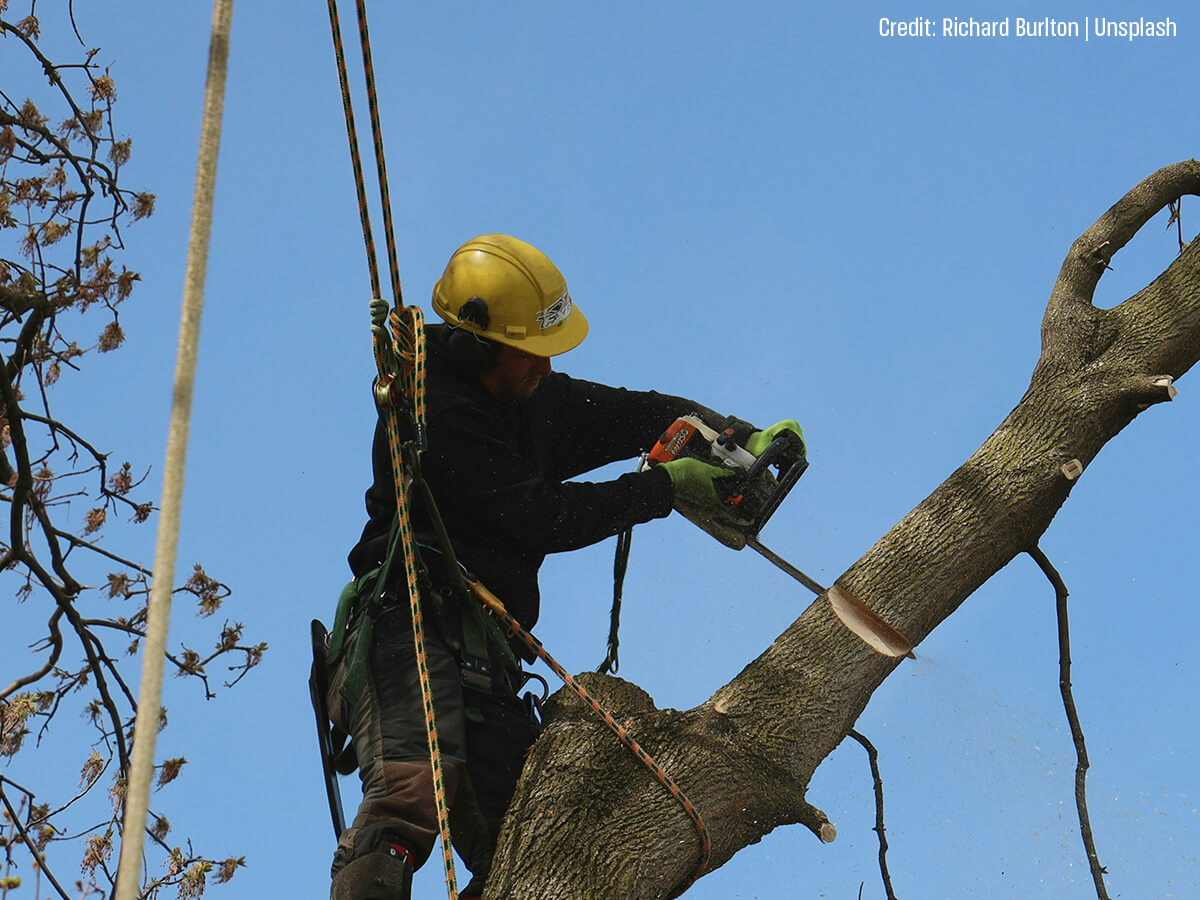
When you see a broken branch, it’s true that you should remove that immediate hazard. But when it comes to structural pruning (i.e. the actual job of shaping the tree, removing large live branches, or thinning the canopy) timing is critical.
The Reality: The truth is that there is an ideal time for pruning a tree, usually during the tree’s dormancy in late winter or very early spring. At this time, the tree is “asleep,” its energy is stored in its roots, and the branch structure is clearly visible without leaves. Pruning just before spring’s growth spurt allows the tree to dedicate its full energy to sealing the new wounds as the season begins.
Pruning at the wrong time is a wasteful and dangerous approach to tree care. Pruning in late spring after the leaves have emerged forces the tree to waste all the energy it just spent on producing that foliage. Meanwhile, pruning in late summer or early autumn can encourage new, weak growth that won’t have time to harden off before winter, leading to frost damage. For some species, like elms and oaks, pruning during the active summer season can even prove a death sentence, as the open wounds attract the insects that carry devastating diseases like Dutch Elm Disease and Oak Wilt.
4. Myth: “Pruning heavily will encourage strong, healthy growth.”
This myth often goes hand-in-hand with topping. The thinking is that a hard pruning will “invigorate” the tree, shocking it into producing a lush, full canopy.
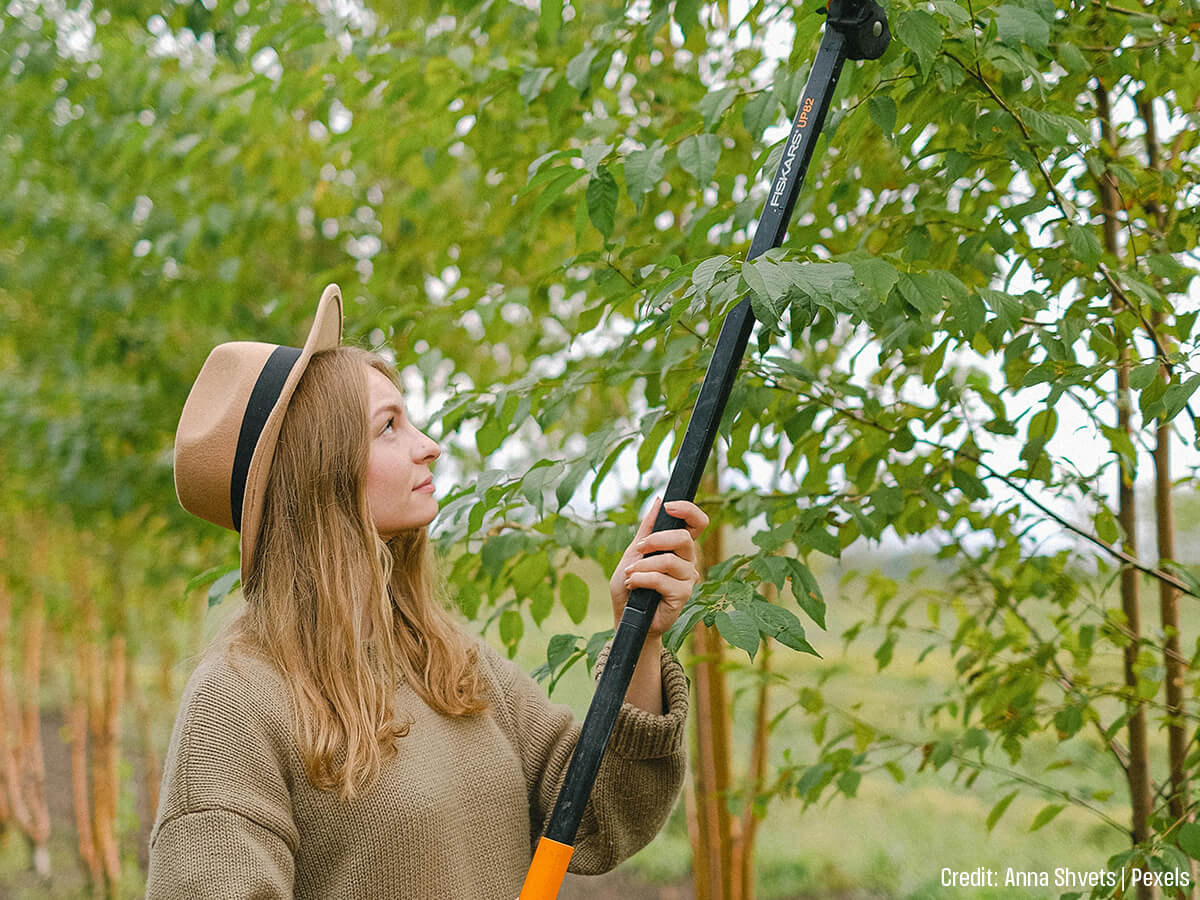
The Reality: Removing more than 20-25 per cent of a mature tree’s live canopy in one go is a severe shock to its system. As with topping, the resulting growth is not strong or healthy; it is a panicked, weak, and defensive response. The tree is scrambling to replace its lost leaves (its energy source) before it starves.
This stress makes the tree highly vulnerable to secondary problems, like insect infestations and diseases, which prey on weakened trees. Proper pruning is a selective, subtle process. The goal is to remove dead, diseased, or crossing branches to improve the tree’s structure and allow better light and air circulation throughout the canopy. It is a practice of finesse, not force.
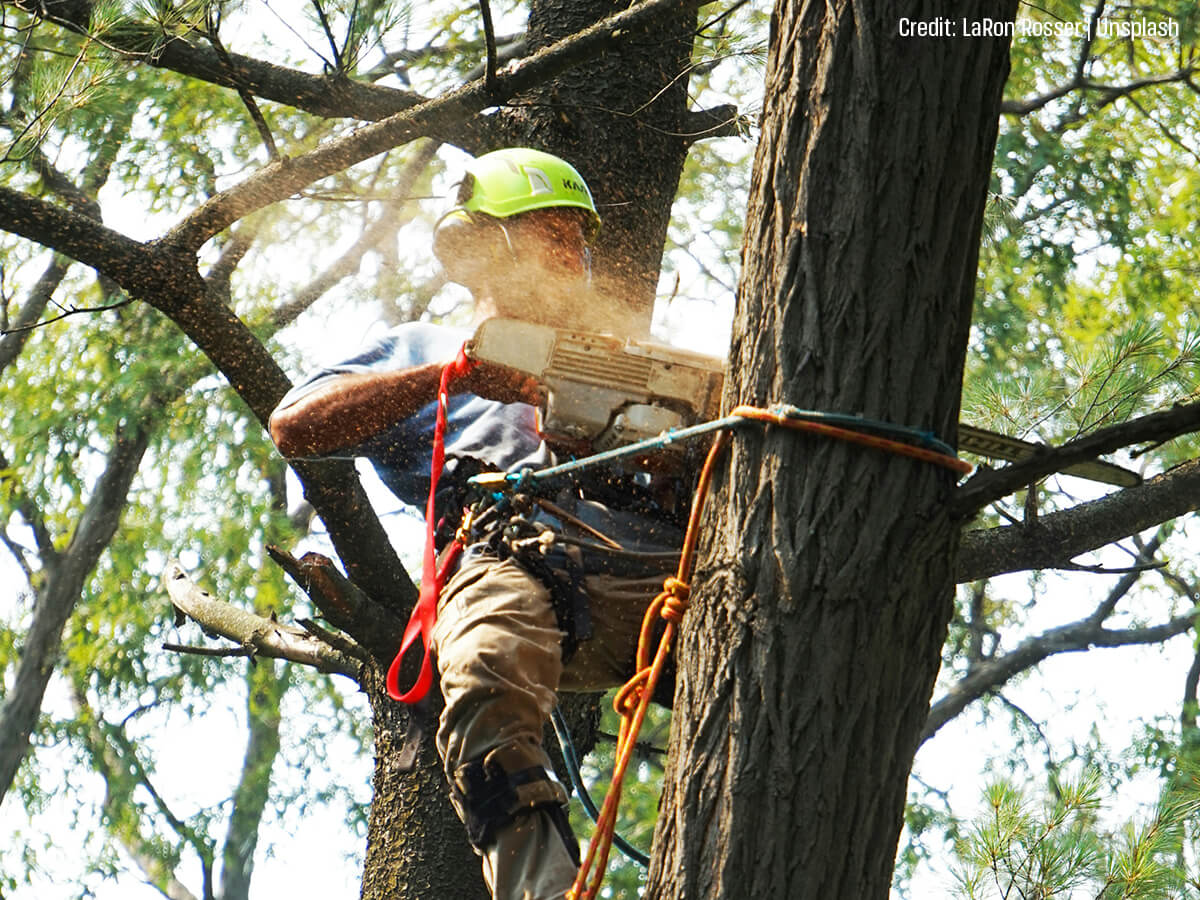
Your trees are the most valuable, long-lasting features of your property, and so giving them proper care is critical. Having the proper pruning tools and methods matters, but so does having a basic understanding of how that pruning affects them. These common myths are shortcuts that lead to long-term decline and disaster. If a pruning job on your tree requires a chainsaw and a ladder, or seems too complex to tackle yourself, the prudent measure in that case is to put your trust in a certified arborist. They understand how to work with a tree’s natural defences, not against them.
The right partner can make all the difference when it comes to giving your trees the care they deserve. Dave Lund Tree Service provides full tree care services, from pruning to cabling, ensuring your trees grow healthy and beautify your property properly. Give us a call now at (905) 775-1020 when you need a helping hand with your trees.