
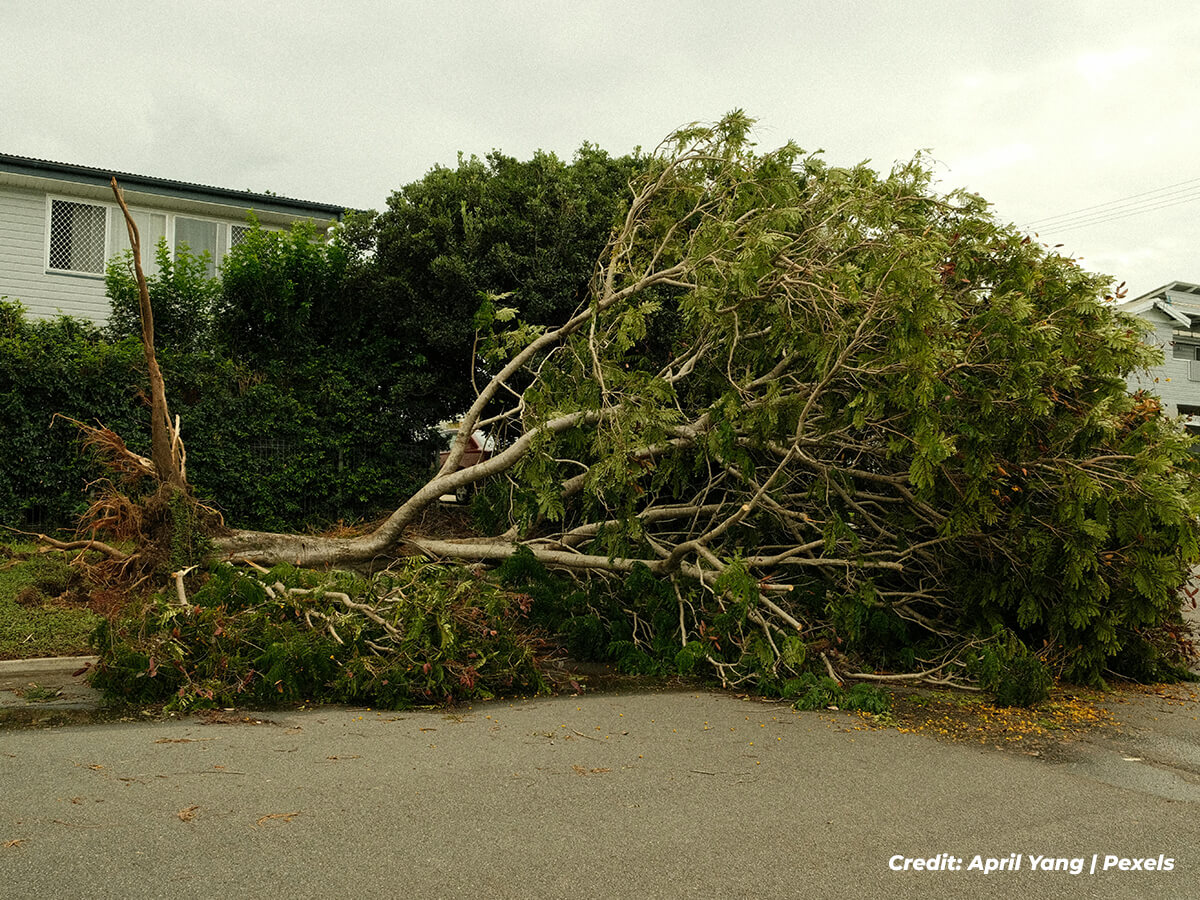
Storms are a common fact of life for many Canadians, even in summer. And while surviving a storm is always good news, it’s not only people who have to watch out when a storm comes thundering in. Your trees are particularly at risk in case of a strong enough storm (and by extension so are the people living nearby). In case of a strong enough storm, even the tallest, strongest trees can fall, or suffer enough damage that a future fall is a distinct possibility.
Fortunately, it’s not all doom and gloom. Arborists may offer alternative methods to tree removal in the form of proactive measures for homeowners like yourself intent on salvaging beloved trees that add to the landscape. Cabling and bracing is the go-to solution for preserving storm-damaged trees and keeping them upright and stable after a storm. They aren’t just for preserving your trees, however; they’re also integral to preventing future damage to nearby property and ensuring the safety of those below. These supplemental support systems, when professionally installed, can add years of life to a compromised but viable tree, fortifying it against the inevitable next bout of severe weather.
Here’s a short guide to how cabling and bracing help to let you know what to expect from treating your trees in this way.
1. Initial Post-Storm Assessment: A Careful Eye on the Canopy
After a significant weather event, the first step must always be a thorough and cautious visual inspection. Strong enough storms can knock down trees, as residents of Mattawa experienced just a few weeks ago. On your inspection, look for obvious signs of distress. Are there large, broken branches hanging precariously (often called “hangers” or “widow-makers”)? Examine the trunk for new cracks, particularly vertical ones (these cracks can signal a deep split that compromises the tree’s stability). A tree that has developed a sudden lean (particularly if accompanied by heaving soil or exposed roots on the opposite side) is a clear red flag indicating potential root failure. Pay close attention to unions, where large branches or multiple stems join the trunk. These areas are naturally weaker and prone to splitting under extreme force. Any deep cracks or splits in these crotches warrant immediate attention. Keep in mind, however, that this initial survey is not about making a final diagnosis concerning whether your tree needs professional removal, but about identifying potential hazards that require a professional arborist’s evaluation.
2. Understanding Supplemental Support: The Role of Cabling and Bracing
When an arborist determines that a tree has a structural weakness but is otherwise healthy, they may recommend a supplemental support system. This is where cabling and bracing come in. These are not methods for “fixing” a tree in the traditional sense, but rather tree maintenance techniques that provide support and limit movement, thereby reducing the risk of failure. Cabling is primarily used high in the tree’s canopy to support weak or overextended branches and co-dominant stems (trunks that are roughly equal in size and emerge from the same point). Bracing, on the other hand, involves the installation of rigid rods, usually through the trunk or large limbs, to reinforce weak points, such as a split crotch, from the inside. Often, these two systems are used in conjunction to provide a comprehensive support structure.
3. Cabling Explained: Tying the Crown Together
The fundamental principle of cabling is to connect two or more limbs, distributing the load and stress between them. This prevents them from twisting or spreading apart during high winds or under the weight of snow and ice.
- Dynamic Cabling:
Modern arboriculture often favours dynamic cabling systems. These use synthetic, UV-stabilized ropes that have a degree of elasticity. This allows the tree to sway and move naturally, which is crucial for its ability to build responsive growth and strength, while still providing a catch-net against extreme movements that could cause failure.
- Static Cabling:
The more traditional method involves high-strength steel cables. These are rigid and significantly restrict movement between the cabled limbs. While effective, they are now often reserved for situations where very little movement is desired or to support limbs that have already started to split. The installation is more invasive as it typically involves drilling through the limbs to install hardware.An arborist will install the cable approximately two-thirds of the way up from the weak union to the top of the branches being supported. This placement provides the best leverage and support.
4. Bracing in Detail: Internal Fortification
Bracing is a more invasive but highly effective method for providing rigid support to specific structural flaws.
- Through-Rod Installation:
The most common bracing technique involves drilling a hole through a weak or splitting union and inserting a threaded steel rod. Washers and nuts are then secured on either end and tightened to pull the split together and provide rigid support. These parts help secure the rod in place and prevent the two sections from pulling apart or moving independently. - Multiple Rods for Major Splits:
For larger trees or more significant splits, an arborist may install several rods parallel to one another. This distributes the supportive force more evenly and provides a much stronger reinforcement, effectively bolting the compromised wood together. Bracing is almost always accompanied by a cabling system in the upper canopy to provide a complete support solution and ensure the tree’s weight is distributed evenly.
5. The Importance of Professional Installation: Not a DIY Endeavour
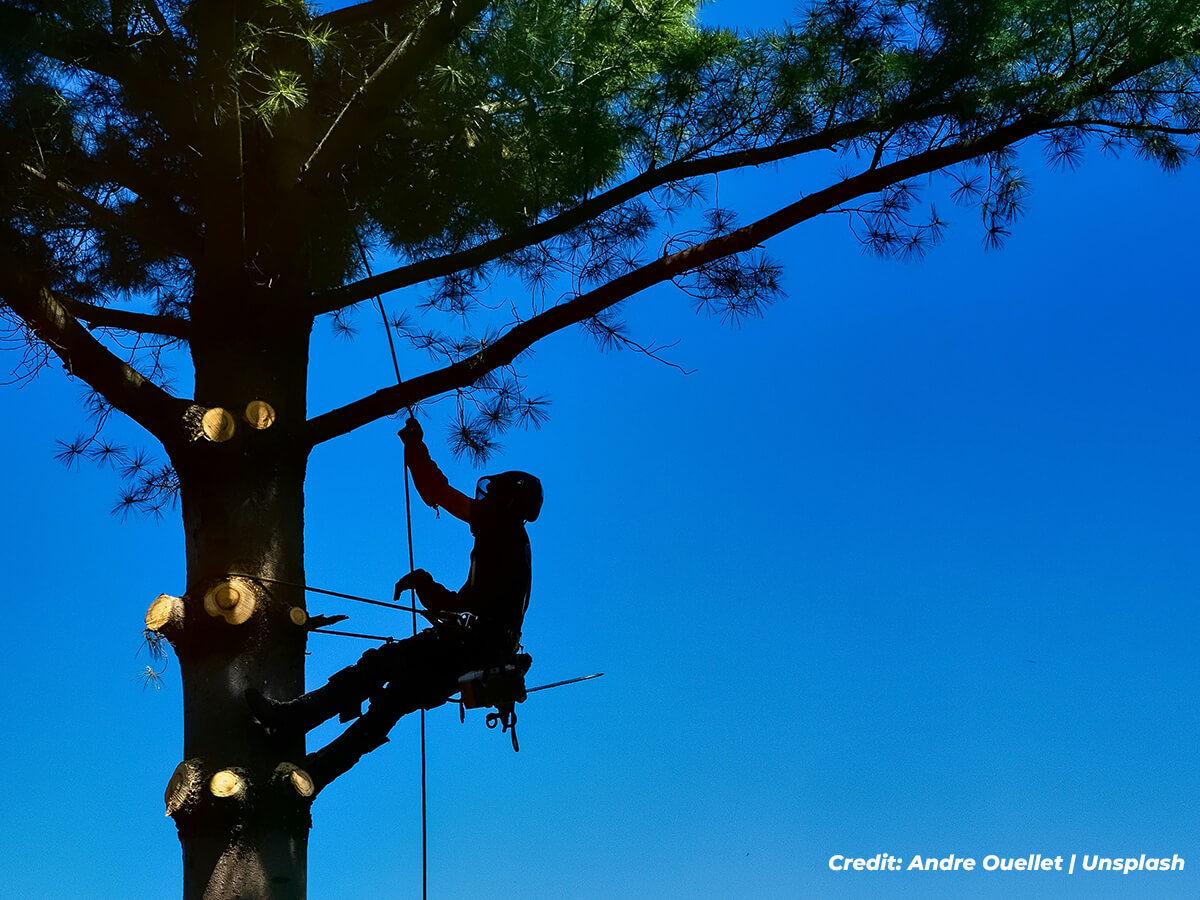
The assessment of a tree’s structural integrity and the design and installation of a support system are complex tasks that require extensive knowledge of tree biology, physics, and engineering principles. A certified arborist understands how a tree will grow around the hardware, the precise drilling angles needed to avoid causing further damage, and the correct tension to apply to cables, all to ensure that the work of cabling and bracing does its job to keep the tree’s surroundings secure. Improperly installed systems can be ineffective at best and harmful at worst. A cable that is too tight can girdle and kill a limb, while a poorly placed brace rod can create a new weak point. Furthermore, working at height with specialized equipment is inherently dangerous. For safety and the tree’s long-term health, always entrust this work to a qualified professional.
6. Materials and Hardware: The Nuts and Bolts of Support
Professional arborists use a specific range of materials designed for longevity and strength. Steel cables are typically extra-high-strength (EHS) and galvanized or otherwise treated to resist corrosion. Dynamic ropes are purpose-built for arboricultural use, resisting abrasion and degradation from sunlight. The hardware—eye bolts, threaded rods, lag-threaded hooks, thimbles, and nuts—is also made from high-quality steel. The size and type of hardware are carefully selected based on the diameter of the limb, the weight it must support, and the specific type of wood. An arborist will ensure that all components work together as a cohesive system to safely and effectively support the tree.
7. Long-Term Care and Inspection: An Ongoing Commitment
Installing a cabling and bracing system is not a one-time fix. It is the beginning of an ongoing commitment to the tree’s care.
- Annual Inspections:
The system should be visually inspected at least once a year by a qualified arborist. While the cabling and bracing can last several years after installation, it’s also prudent to inspect the tree to ensure it stays stable. On these inspections, the arborist will check for cable tension, wear and tear on ropes and hardware, and how the tree is growing in response to the support. - Adjustments and Growth:
As the tree grows, adjustments may be necessary to adjust for that growth. A cable might need to be loosened, or the hardware may become enveloped by new wood, which is often a sign of a healthy response. The arborist will assess if the system remains effective as the tree’s dynamics change over its life. - Lifespan of Materials:
While steel components can last for decades, dynamic rope systems have a shorter lifespan, often needing replacement every five to ten years depending on the material and environmental conditions. Regular inspections will determine when replacement is necessary to maintain the integrity of the support.
By following a storm with careful assessment and proactive support, you can take some effective steps for post-storm care to preserve your tree. Cabling and bracing are powerful tools in the arborist’s toolkit, enabling you to preserve the beauty and appeal of your trees even after they’ve been rocked by a powerful storm. With the right treatment, and regular TLC after installation, your trees can continue to keep standing and be prepared for the buffeting the next storm might treat them to.
When you need a reliable arborist to help you give your trees the care they deserve, Dave Lund Tree Service has you covered. We provide a wide range of tree care services, from pruning services to cabling and bracing, all in the name of providing tree TLC that keeps them tall and healthy. Give us a call now at (905) 880-1828 for professional arborists to help you care for your trees properly.