
A chainsaw in unskilled hands is a weapon, not a tool. Hiring amateurs for tree work invites severe risk; dropped branches damage roofs, severed roots kill trees, and lack of insurance can lead to personal bankruptcy.
The gap between a professional tree service and a fly-by-night operator is immense. Trees store massive energy requiring physics and biology to manage safely; hiring on price alone often costs more in the long run. You must vigorously vet who climbs your trees.
Why Is a Professional Tree Service More Than Just Cutting Branches?
Many homeowners mistakenly view tree work as simple manual labour. They believe the only difference between companies is the price on the quote. This misconception is dangerous. A legitimate tree service operates within a framework of strict safety protocols and arboricultural science.
When you hire a professional, you are paying for risk mitigation. You are paying for the years of training that allows a climber to rig a 500-pound log over your greenhouse without scratching a pane of glass. You are paying for the knowledge that prevents the spread of deadly pathogens like Dutch Elm Disease or Oak Wilt.
The Hidden Costs of Amateurs:
- Property Damage: Scratched driveways, dented gutters, or crushed fences are common with uninsured workers.
- Tree Death: Improper cuts (like flush cuts) can lead to rot that eventually kills the tree, necessitating expensive removal later.
- Legal Liability: If an uninsured worker falls from your tree, you could be sued for their medical bills and lost wages.
What Specific Certifications Should You Look For?
In Canada, the gold standard for tree care credentialing is the International Society of Arboriculture (ISA). An ISA Certified Arborist has passed a comprehensive exam covering everything from soil biology to risk assessment. However, certification is not just a badge; it is proof of adherence to industry standards.
You should ask to see their certification number and verify it. A company that invests in certified staff is a company that cares about the long-term health of your trees, not just the quick cash from cutting them down.
The Science of Standards: There is a tangible difference in the results provided by certified professionals. According to a study, pruning urban trees according to arborist union standards ensures good growth and long-term structural stability, while enhancing their operational safety – mechanical and biological stability (Paganová et al., 2018). This data proves that following established arboricultural guidelines isn’t just bureaucracy; it is the only way to ensure your trees remain safe and valuable assets rather than becoming hazards.
Why Is Insurance Verification Non-Negotiable?
This is the single most critical factor in your decision. If a company cannot prove they have insurance, send them away immediately. Verbal assurances are worthless. You need to see a current Certificate of Insurance.
Two Types of Insurance You Must Verify:
- Liability Insurance: This covers damage to your property. If a tree crashes through your garage, this policy pays for the repairs. Ensure they carry a sufficient amount; usually $2 million to $5 million is the standard for reputable Canadian companies.
- Workers’ Compensation (WSIB): In Canada, this is vital. If a worker breaks a leg on your property and the company does not have WSIB coverage, you become the employer in the eyes of the law. You could be held liable for their injury.
How to verify: Do not just look at the piece of paper. Call the insurance provider listed on the certificate. Ask them if the policy is currently active and if it covers tree work specifically. Some companies buy cheap landscaping insurance that specifically excludes aerial tree work to save money.
How Do You Spot Red Flags During the Estimate?
The initial consultation is your interview. Watch how the representative behaves. Are they looking at the tree’s health, or are they just trying to sell you a removal? A true arborist will often try to save a tree before suggesting removal, whereas a scammer just wants the wood on the ground.
Warning Signs:
- Topping: If they suggest “topping” your trees (cutting the top off to reduce height), fire them. Topping is a harmful practice that destroys the tree’s structure and makes it more dangerous.
- Spikes on Live Trees: If they plan to climb your live Maple or Ash using leg spikes (gaffs), stop. Spikes should only be used for removals. Using them on a live tree creates wounds that invite insects and disease.
- Door-to-Door Solicitation: Be wary of people who knock on your door claiming they were “just in the neighbourhood” and noticed your tree needs work. Reputable companies are usually too busy to solicit door-to-door.
- Cash-Only Deals: While some legitimate businesses accept cash, a demand for cash-only (no tax, no paper trail) is a major red flag regarding insurance and legitimacy.
Whether you are looking for complex removal or routine tree pruning in Markham, these red flags are universal indicators of incompetence.
What Equipment Should a Professional Company Possess?
Tree work requires heavy, specialized machinery. The condition and type of equipment a company uses tell a story about their capabilities and safety culture.
Essential Gear:
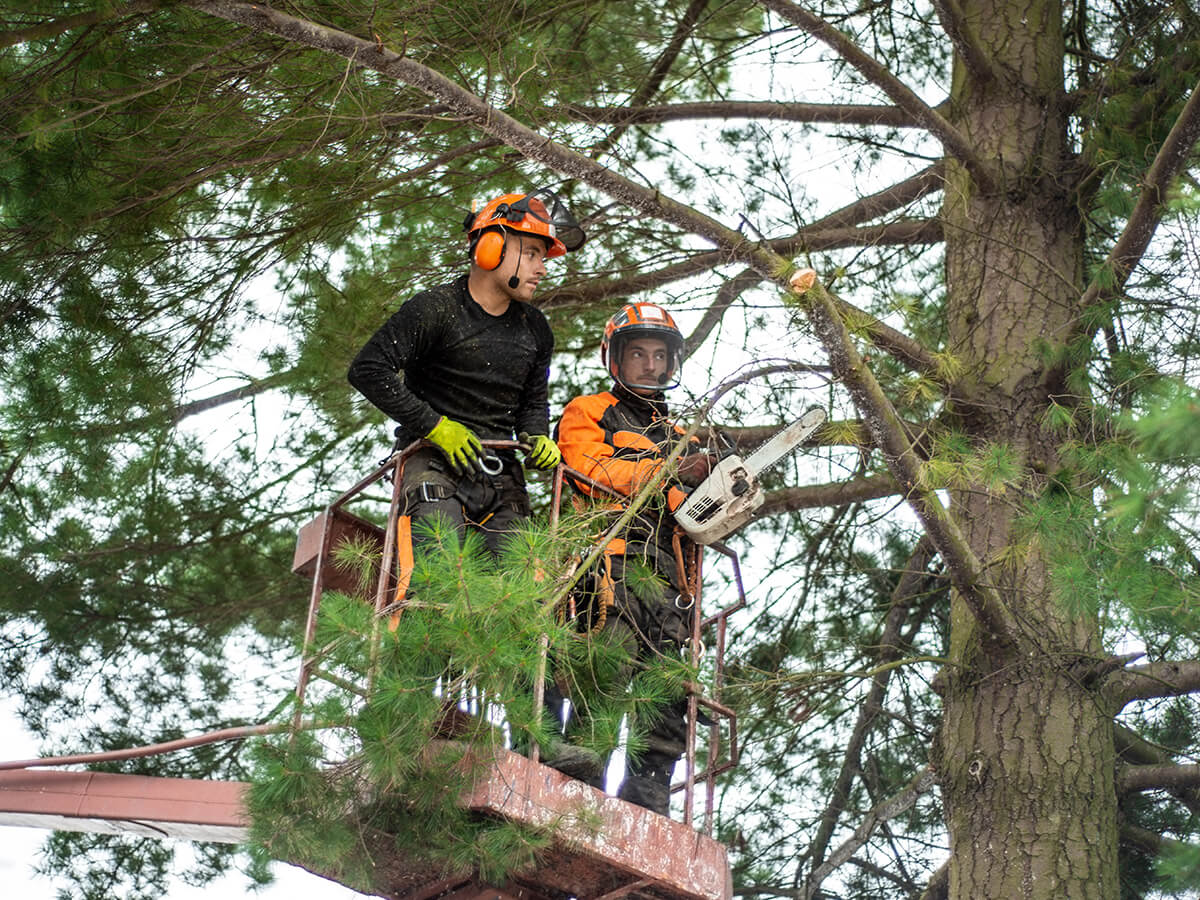
- Bucket Trucks: For large trees near roads or homes, aerial lifts provide a safe working platform.
- Wood Chippers: A professional-grade chipper can handle large branches quickly. If they plan to haul brush away in the back of a pickup truck without chipping it, the job will take forever and leave a mess.
- Personal Protective Equipment (PPE): Every crew member should be wearing a helmet, eye protection, and chainsaw protection (chaps). If you see a crew working in t-shirts and ball caps, they are ignoring basic safety laws.
The Importance of Maintenance: Look at their trucks. Are they rusted out and leaking oil on your driveway? If they don’t maintain their own equipment, they certainly won’t treat your property with respect. Well-maintained gear indicates a disciplined, professional operation.
How Important Are Written Contracts and Detailed Quotes?
Never start work without a signed contract; clear details are the only way to prevent costly disputes.
- Scope of Work: Ensure specific trees and actions are listed (e.g., “Prune Silver Maple for 2m clearance,” not just “Trim tree”).
- Cleanup & Disposal: Clarify who handles the wood and if stump grinding is included.
- Timeline & Cost: Lock in dates and confirm if the price is fixed or hourly.
- Eliminate Ambiguity: If it isn’t written down, assume it isn’t included. A precise contract protects you.
Why Should You Check Local Reputation and Reviews?

In the digital age, a company’s history is transparent. However, you need to know where to look. Do not rely solely on the testimonials on their own website (which they control). Look at third-party platforms.
Where to Look:
- Google Reviews: Read the 3-star and 4-star reviews. These often give the most balanced view of the company’s reliability.
- Local Community Groups: In Canada, neighbourhood Facebook groups or Nextdoor are powerful tools. Ask your neighbours who they used.
- Better Business Bureau (BBB): Check for resolved and unresolved complaints.
Longevity Matters: How long has the company been operating under the same name? A company that has served the community for 20 or 40 years has a reputation to protect. New companies pop up and vanish constantly; often changing names to avoid bad reviews or lawsuits. A long-standing local presence is a strong indicator of reliability.
Does the Company Prioritize Safety Standards?
Tree care is one of the most dangerous professions in the world. A company that prioritizes safety protects you. If an accident happens on your property, it is traumatic and legally complicated.
Safety Protocols to Ask About:
- Traffic Control: If the tree is near the street, do they have a plan for traffic control?
- Drop Zones: How will they secure the area under the tree to prevent family members or pets from entering the danger zone?
- ANSI Z133 / Canadian Standards: Ask if they follow industry safety standards. A blank stare in response to this question is a bad sign.
A professional crew holds a “tailgate meeting” or safety briefing before they start the saws. They discuss the specific hazards of your property; power lines, uneven ground, or weak tree structures. If they skip this, they are cutting corners.
How Do They Handle Post-Job Cleanup?
True quality is defined by the cleanup. Expect lawns raked free of debris, hardscapes blown clear, and wood either neatly stacked or removed. Always confirm a cleanup guarantee to ensure you aren’t left managing the mess yourself.
Why Is the Cheapest Quote Often the Most Expensive?
It is tempting to pick the lowest number on the spreadsheet. However, in the tree industry, a significantly lower price usually means something is missing.
Where They Cut Costs:
- No Insurance: This is the biggest cost saver for shady operators and the biggest risk for you.
- Unskilled Labour: Paying experienced climbers costs money. Paying a random labourer is cheap.
- Rushed Work: To make a profit on a low bid, they have to work fast. Rushed work leads to mistakes, accidents, and ugly pruning cuts.
If one quote is 30% lower than the others, ask why. It is rarely because they are “more efficient.” It is usually because they are cutting corners that you cannot see; until something goes wrong.
How Does Seasonality Impact Availability?
Canadian tree service demand fluctuates seasonally. Spring and summer bring long wait times, while the dormant fall and winter seasons offer better availability. Winter pruning benefits from frozen ground that protects lawns, making off-season scheduling a smart choice for faster service and optimal care.
Ready to Secure Your Landscape’s Future?
Don’t compromise your home’s safety with unverified amateurs. Demand certification, insurance, and detailed contracts to protect your property value. For trusted, expert tree service in Markham, contact Dave Lund Tree Service at (905) 884-0511.