Canadian summer storms turn unchecked canopies into giant, wind-catching sails, making delayed maintenance a dangerous gamble. Securing a professional tree service before heavy foliage sets in is the most effective way to safeguard your home.
Early corrective cuts prevent intense weather from destroying compromised trees. Check your canopy today. If you spot any of these seven warning signs, take immediate action to ensure your landscape remains a safe, beautiful asset.
1. Dead, Broken, or Hanging Branches (Widowmakers)
Winter ice storms and heavy snow loads leave behind a trail of unseen destruction in the canopy. Branches that snapped under the immense weight of winter precipitation often do not fall all the way to the ground. They become trapped, suspended high in the crown by other branches. These are grimly referred to as “widowmakers.” Spring and early summer winds shift the canopy, dislodging these suspended limbs and causing them to plummet without warning.
Why Immediate Removal is Critical
The sheer force of a falling branch, accelerating from twelve metres in the air, is enough to crush a vehicle, destroy a deck, or cause fatal injuries. Key indicators of widowmakers include:
- Bark that is peeling away from a specific upper limb.
- Branches resting at unnatural, precarious angles against healthy limbs.
- Wood that lacks the supple flexibility of living tissue.
You cannot wait for these hazards to resolve themselves. An arborist must ascend the canopy and safely rig these broken limbs down to the ground. Any deadwood that is still attached to the trunk needs to be removed. Dead branches act as entry points for water, accelerating rot that can spread deep into the heartwood of the main trunk, compromising the entire biological system of the tree before summer even begins.
2. The Canopy Is Dangerously Dense
When a tree produces an excessive amount of interior branching, the canopy transforms into a solid wall of green once the summer leaves fully emerge. While a thick, lush canopy might look appealing, it is structurally problematic.
A healthy tree requires adequate airflow. Air must pass through the branches to dry the leaves after a rainstorm; constant moisture trapped in a dense canopy creates the perfect breeding ground for fungal infections like powdery mildew or anthracnose.
The “Sail Effect” During Summer Storms
Wind must be able to pass through the tree, not push against it. A canopy that is too dense acts exactly like a ship’s sail. When a sudden Canadian summer squall hits, the wind resistance against the solid mass of leaves puts immense strain on the trunk and the root system.
If the root system is already compromised by urban compaction, that added sail effect acts as a powerful lever, uprooting the tree entirely from the soil. Professional thinning selectively removes specific live branches to reduce this density. This targeted reduction allows the wind to filter through the crown harmlessly, significantly reducing the mechanical stress on the tree’s structural foundations.
3. Branches Are Crossing or Rubbing Together
Trees do not always grow in perfect symmetry. Driven by the search for sunlight, branches sometimes grow inward toward the centre of the tree or cross paths with neighbouring limbs. As the tree sways in the wind, these crossing branches constantly rub against one another.
Persistent friction acts like coarse sandpaper, gradually stripping the protective outer bark away and exposing the sensitive cambium layer underneath. The resulting mechanical damage creates an open, weeping wound on both branches.
Preventing Summer Pest Infestations
In the heat of summer, when insect activity is at its peak, these open wounds emit a chemical signal that attracts wood-boring beetles and aphids. The exposed wood also becomes highly susceptible to airborne fungal spores.
Addressing crossing branches before the summer foliage makes them difficult to see is crucial. An arborist will evaluate the competing limbs and selectively remove the weaker or less structurally important branch. This preventative cut eliminates the friction, stops the bark damage, and allows the remaining branch to seal its wound naturally before summer pests arrive to exploit it.
4. Growth is Obstructing Structures, Roofs, or Clearances
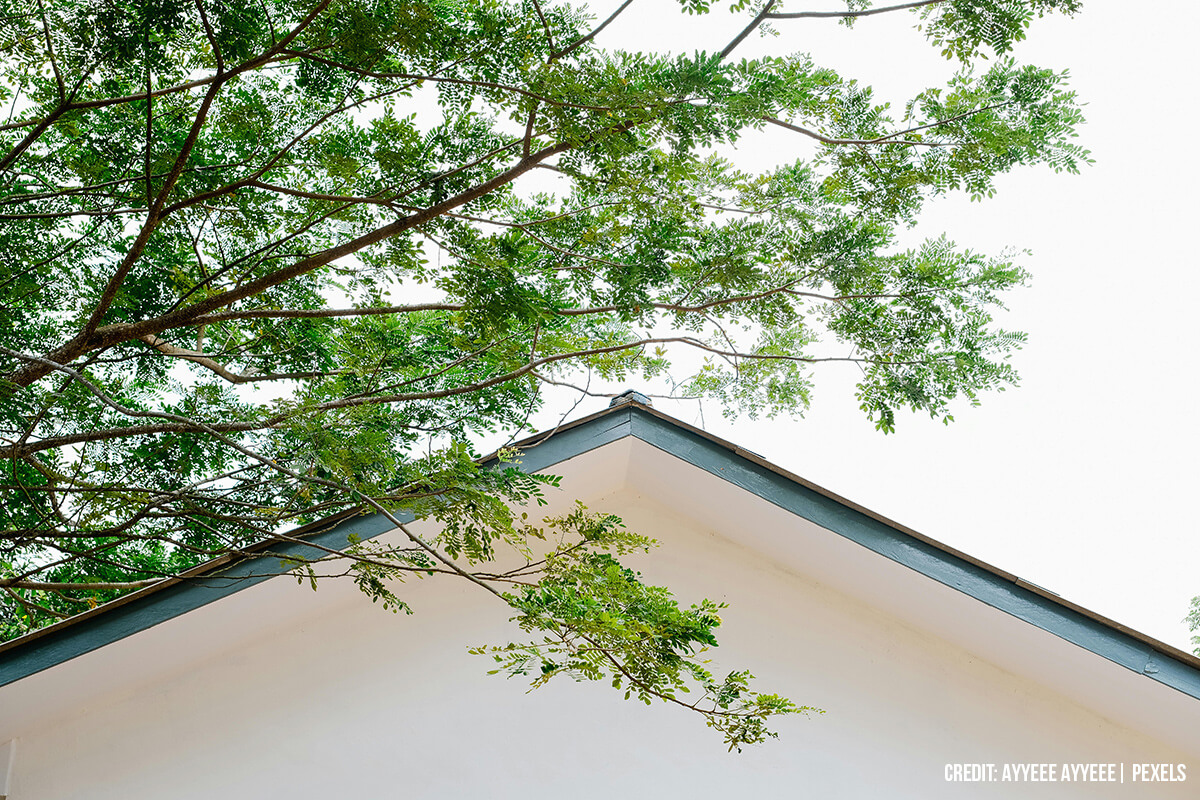
If branches are currently resting lightly on your shingles or hovering just inches above your eaves, the situation will only deteriorate. When the substantial weight of summer leaves pulls the branches further down, that light touch turns into heavy, constant scraping.
Continuous contact with your roof degrades the protective asphalt granules on your shingles, leading to premature roof failure and expensive water leaks. Limbs that touch your house also act as a direct highway for rodents, squirrels, and raccoons looking for an entry point into your attic to nest.
Maintaining Safe Property Boundaries
If you require clearance over a driveway, sidewalk, or structure, proactive trimming is non-negotiable. Whether you are managing a massive Elm in a sprawling rural backyard or scheduling routine tree pruning in Markham for a suburban property, maintaining distinct boundaries between your trees and your structures is vital. A proper safety buffer includes:
- Removing limbs within three metres of a sloped roof to prevent abrasion.
- Clearing branches that obscure street signs, sightlines, or municipal lighting.
- Lifting the lower canopy to prevent interference with pedestrian walkways or driveway access.
Proper clearance cuts ensure that the tree maintains its natural shape while eliminating the physical threat to your property’s exterior envelope. Do not wait for the branches to cause damage before deciding to cut them back.
5. Visible Signs of Disease, Fungi, or Decay
The dormant season and early spring reveal the bark and trunk in sharp detail. This is the optimal time to inspect for biological threats. Fungal brackets, which look like semi-circular mushrooms growing directly out of the trunk or large limbs, are an immediate and severe red flag.
These conks indicate that wood decay fungi are actively consuming the structural integrity of the tree from the inside out. By the time the humid heat of summer arrives, the environment accelerates this fungal growth, rapidly degrading the wood’s strength.
Stopping Internal Rot Before Heat Hits
Other visible signs include deep cracks in the bark, sunken areas known as cankers, or unexplained oozing sap. You cannot reverse internal decay, but a certified expert can assess the extent of the rot.
Using specialized diagnostic tools, professionals can measure the density of the wood to determine exactly how much healthy timber remains intact around the pocket of rot. Sometimes, the diseased limb can be entirely removed to halt the spread.
In other cases, identifying the decay early prevents the catastrophic failure of a massive branch during a summer thunderstorm. Catching these biological warning signs before the tree is stressed by the intense summer sun is critical for long-term landscape management.
6. The Tree Shows Structural Weakness or Co-dominant Stems
Examine the main trunk of your tree. Does it split into two relatively equal-sized vertical stems forming a sharp ‘V’ shape? This configuration is known in arboriculture as a co-dominant stem, and it represents a profound structural flaw.
The union between these stems is inherently weak because bark becomes trapped between them as they expand, a condition called included bark. This prevents the two sides from forming a solid, woody connection. Under the heavy, saturated load of a summer downpour, accompanied by high winds, this weak ‘V’ crotch is highly susceptible to splitting right down the middle, destroying the tree.
The Science of Structural Pruning
Regular, scientific pruning is the key to managing this risk effectively. Research strongly supports a measured, ongoing approach to maintaining canopy structure over time. Frequent and less intense urban tree pruning can optimize ecosystem services performance and minimize branch dieback occurrence, with open dump waste wood disposal being the least CO2 eq emission option (Desirée et al., 2024).
By incrementally reducing the weight on the subordinate stem, an arborist can relieve the stress on the weak union without putting the tree into shock, preserving the asset safely for the upcoming season.
7. Heavy Dieback at the Crown
If the lower branches of the tree are successfully budding and leafing out, but the upper tips of the canopy remain bare, brittle, and lifeless, your tree is suffering from crown dieback. This is a glaring symptom of severe underlying issues, often related to root stress, severe soil compaction, or a systemic vascular disease.
The tree is essentially entering survival mode, abandoning its furthest extremities because it lacks the energy or the vascular capability to push water and nutrients high enough to sustain them.
Addressing the Root Cause
Leaving this massive amount of deadwood at the top of the tree heading into summer is a massive liability. Summer droughts will only exacerbate this vascular stress, making early intervention critical to the tree’s survival.
As the dead branches dry out and become brittle in the summer sun, they turn into dangerous projectiles during high winds. An arborist must perform a crown cleaning to remove this deadwood.
More importantly, seeing this dieback before summer allows the arborist to diagnose the root cause; perhaps initiating a deep root fertilization or soil aeration program to help the tree recover its vitality during the peak growing season.
Ready to Protect Your Property from Summer Storms?
Warmer months demand proactive tree care to prevent devastating summer storm damage. Address structural flaws, deadwood, and dense canopies now rather than leaving your home’s safety to chance. For premier tree pruning in Newmarket, contact Dave Lund Tree Service at (905) 884-0511 to secure your canopy and protect your property today.