
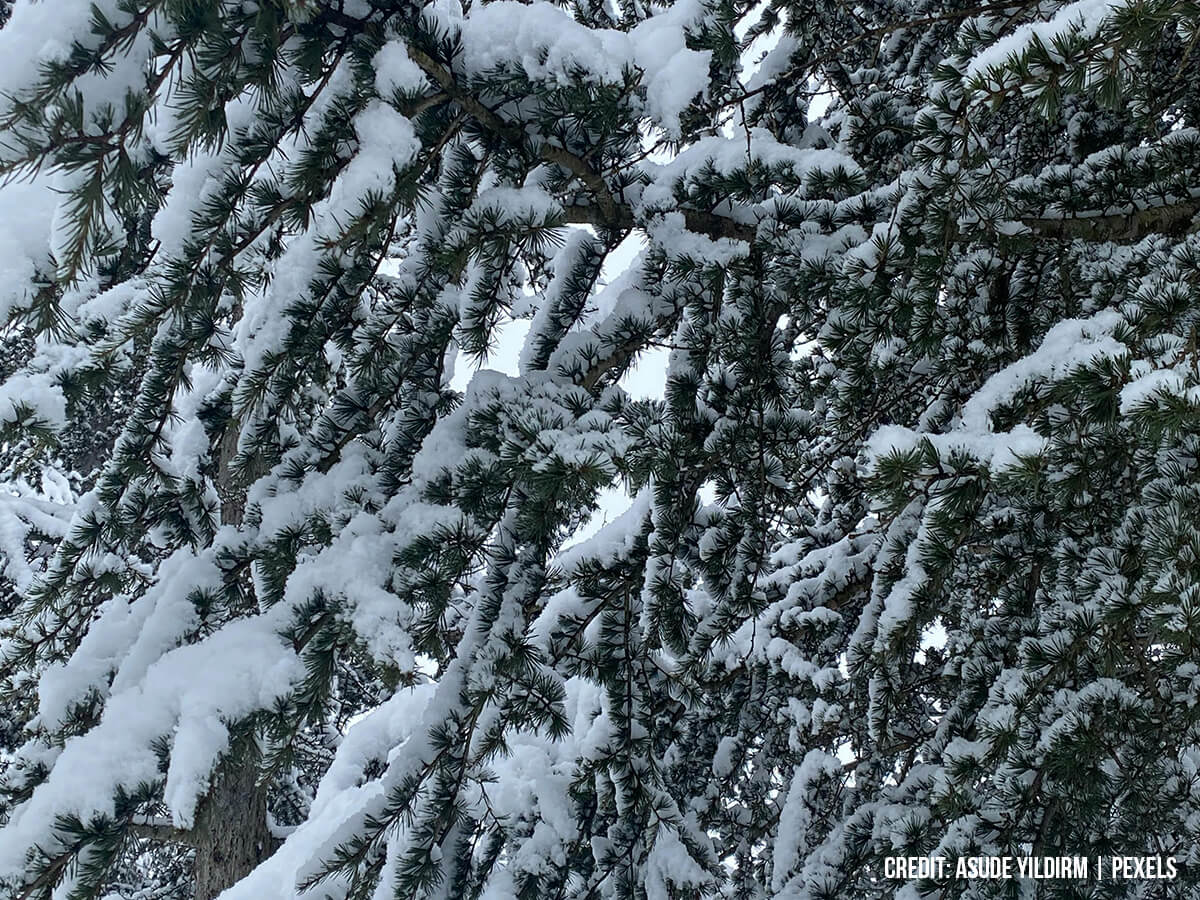
There’s nothing quite like the sight of one of your trees covered in snow to offer a quintessential image of winter beauty. However, there’s more to that scene than an example of a picturesque winter scene; there’s quite a bit of tension going on for that tree. Winter storms impose more than a little stress on a tree’s structural integrity; indeed, they test the limits of wood fibers and stable root anchorage. While a tree may appear sturdy in the summer, the addition of heavy static loads (specifically wet snow and freezing rain) can turn even minor defects into catastrophic structural failures.
Anticipating the winter threats to your trees and preventing any such failures requires shifting your perspective away from trees as simply aesthetic features to one that appreciates them as biological structures that bear a significant weight (their own and the snow’s in this case). The difference between a tree that falls and one that stands very often comes down to proactive identification of weaknesses. By understanding the mechanics of how trees fail, you can take specific steps (and take them now) to mitigate risks before the first major freeze arrives.
Here are some of those critical factors and preventive measures for maintaining tree stability during severe winter weather:
1. The Physics of Ice and Snow Loading
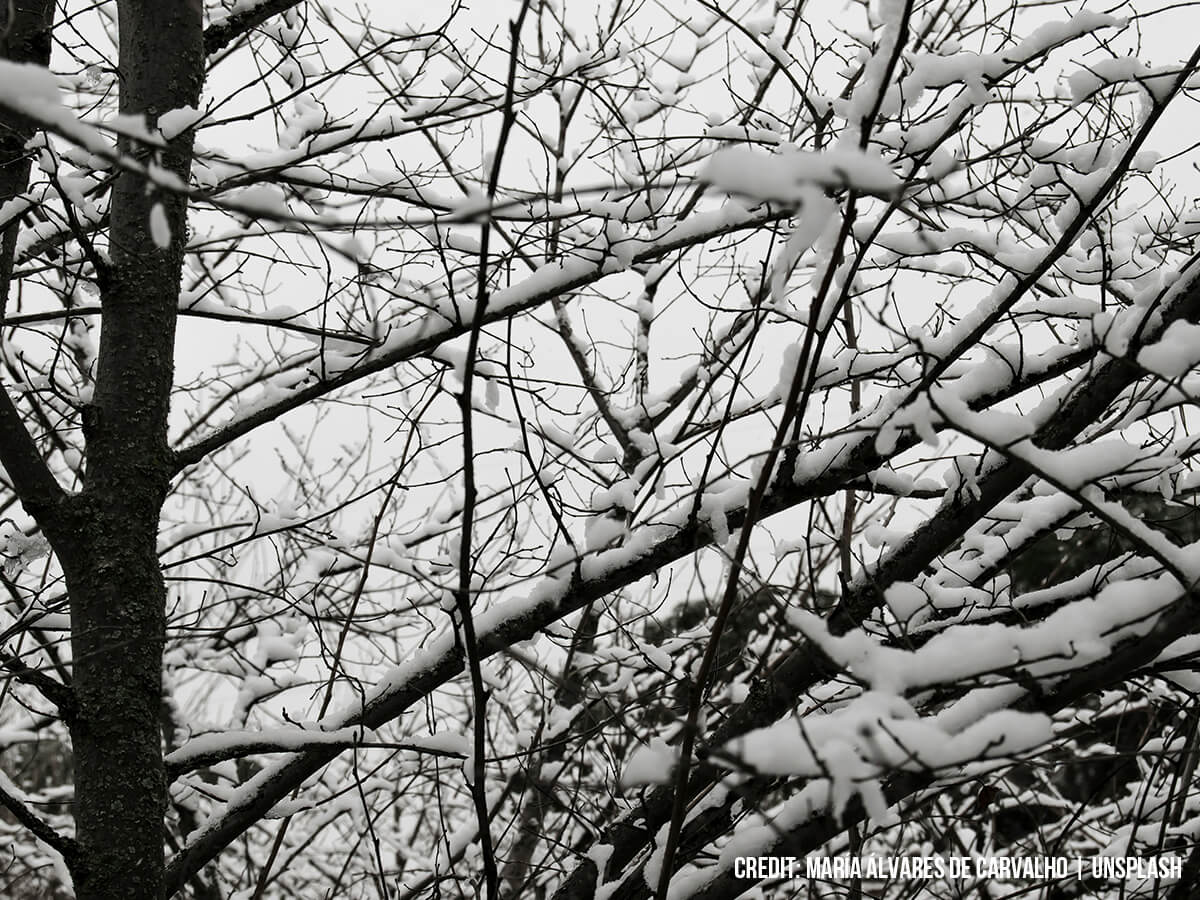
One thing it pays to understand about ice and snow is it doesn’t accumulate evenly. Wet snow and ice adhere to the surface area of every twig, branch, and limb, all of which significantly multiplies the weight a tree must support. This phenomenon (commonly known as loading) increases the downward force on the branch tips. As the tips weigh down, the lever arm (the distance from the trunk to that weight) creates immense torque at the branch collar (where the branch attaches to the trunk). When this torque exceeds the wood’s load-bearing capacity, the branch snaps. When assessing your trees for signs of damage or stress, pay attention to any long, over-extended branches that might act as exaggerated levers. Reducing the length of these branches (rather than removing them entirely, which could impact the tree’s health) reduces the lever arm and the potential for failure.
2. Identifying the “Hollow Limb” Syndrome
Hollow limb syndrome is just as it sounds. A branch may look healthy on the outside, sporting vigorous bark and leaves in the previous season, while being structurally compromised internally where you can’t see. Heart rot or internal decay hollows out the cylinder of the branch, leaving only a thin shell of living wood to support the weight. Since the structural strength of a cylinder lies mostly in its outer layers, the tree can often support its own weight, at least in clement weather. However, the added load of ice overcomes this fragile shell. Watch for fungal fruiting bodies (mushrooms or conks) growing on the bark, or old pruning wounds that have not properly sealed, as these are indicators of internal hollowing.
3. Correcting Co-Dominant Stems
One of the most common causes of whole-tree failure is the presence of co-dominant stems. This occurs when a tree trunk splits into two or more main stems of roughly equal diameter, often forming a tight “V” shape. In this “V,” bark becomes trapped between the two stems as they grow, preventing the formation of a solid wood connection. This is called included bark. Under the pressure of a winter storm, these stems act like a wishbone being pulled apart. If you identify a V-shaped union with a deep crack or seam, then that is a high-risk failure point. Professional arborists can often install support cables to your trees and limit the movement of these stems, preventing them from splitting apart.
4. Managing Asymmetrical Canopies
Trees that grow on the edge of a property or near a building often develop lopsided crowns, reaching toward the sunlight. While this phototropism is natural, it also creates an unbalanced centre of gravity. When a heavy load of ice accumulates on the heavy side of the tree, the torque is applied unevenly to the trunk and the root system. This can lead to root failure (tipping over) rather than branch breakage. Structural pruning aims to rebalance the canopy by selectively thinning the heavier side, ensuring that the snow load is distributed more evenly across the central axis of the tree.
5. The Dangers of Lion-Tailing
In an attempt to prevent damage, some homeowners or inexperienced trimmers will strip all the interior foliage and small branches from a limb, leaving only a tuft of growth at the very end. This practice (known as lion-tailing) is simultaneously counterproductive and dangerous. It removes the dampening effect of the inner branches and shifts all the weight to the end of the limb, maximizing the lever arm effect mentioned earlier. During a storm, lion-tailed branches sway violently and are far more likely to snap than branches with a natural distribution of twigs along their length. For this reason (and to maintain safety for yourself and your property), it’s usually best to trust a professional arborist with any extensive pruning projects.
6. Addressing Root Zone Heaving
Structural failure is not always about what is happening above ground. In late winter, freeze-thaw cycles can affect the stability of the soil. If a tree has a compromised root system (perhaps due to construction damage, compaction, or rot), then the combination of soil saturation and heavy canopy weight can cause the entire tree to uproot. Before the ground freezes completely, inspect the base of the trunk. If you see the soil cracking or lifting on one side (root plate heaving) during a windy day, the tree’s stability is already compromised.
7. Safe Snow Removal Practices
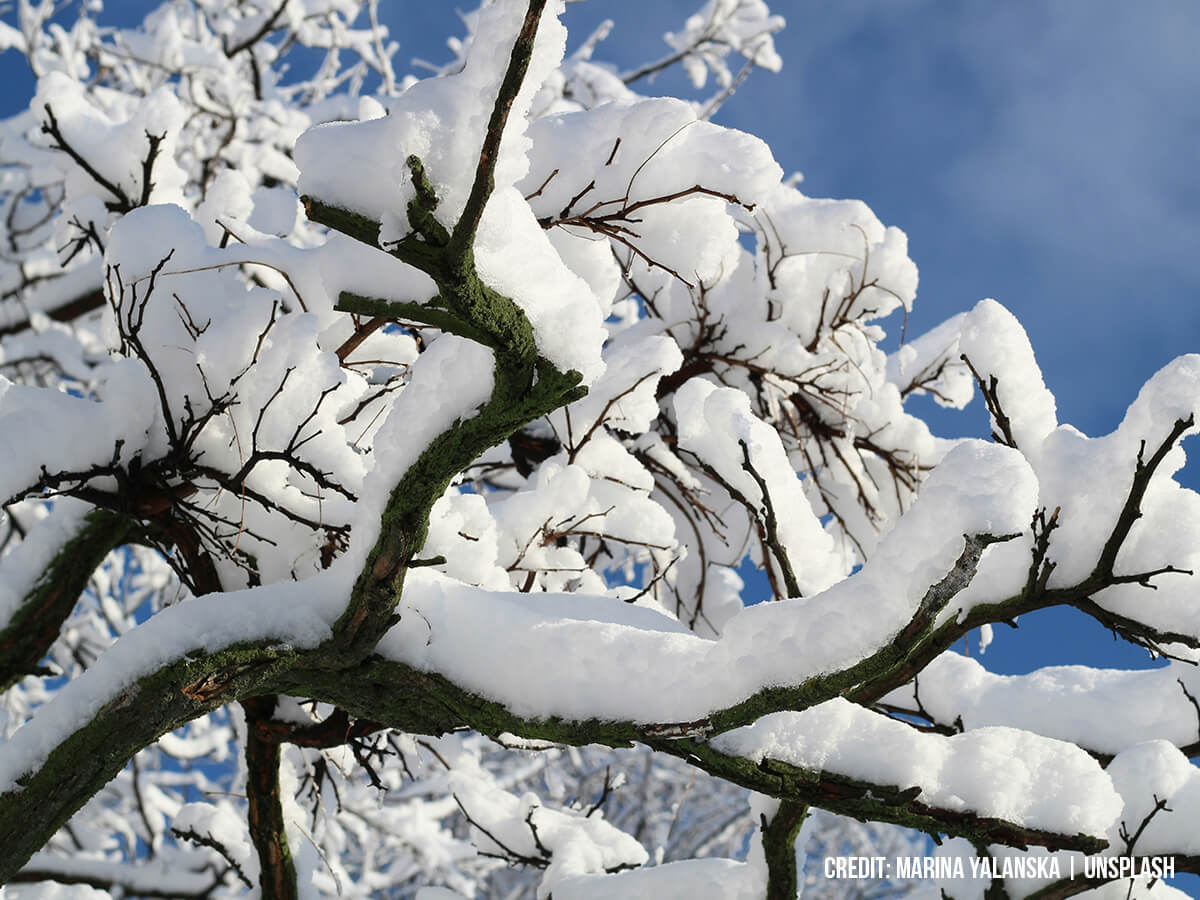
Knowing what to do in the event of a snowstorm is all-important information in Canada. If a tree is already laden with snow, how you react is just as important as how you prepared. There is a strong instinct to shake branches to relieve the weight. However, wood becomes brittle in freezing temperatures. Shaking a frozen, tension-loaded branch can cause it to snap instantly, posing a severe safety hazard to the person standing below. Furthermore, snapping the branch back can cause a rebound effect that damages the vascular tissue. Instead, if removal is absolutely necessary for safety, use a long pole to gently push up on the branch from below to relieve tension, rather than shaking it, or simply allow the snow to melt naturally.
Canadian winters are very often a test for the landscape, yet there’s no reason to assume tree failure is inevitable. By recognizing any structural weaknesses in a tree early, homeowners can be more proactive with respect to their tree care (and offer quite a bit more care in turn). Taking more care with your trees’ structure goes a long way to ensuring they survive the cold to flourish when spring returns.
Taking care that winter storms don’t compromise your trees starts with finding the right arborist to help you. Dave Lund Tree Service offers full arborist services, from pruning to cabling, to ensure your trees get the support they need to stand strong. Call us now at (905) 884-0511 today to schedule your professional assessment and protect your trees through the year.