
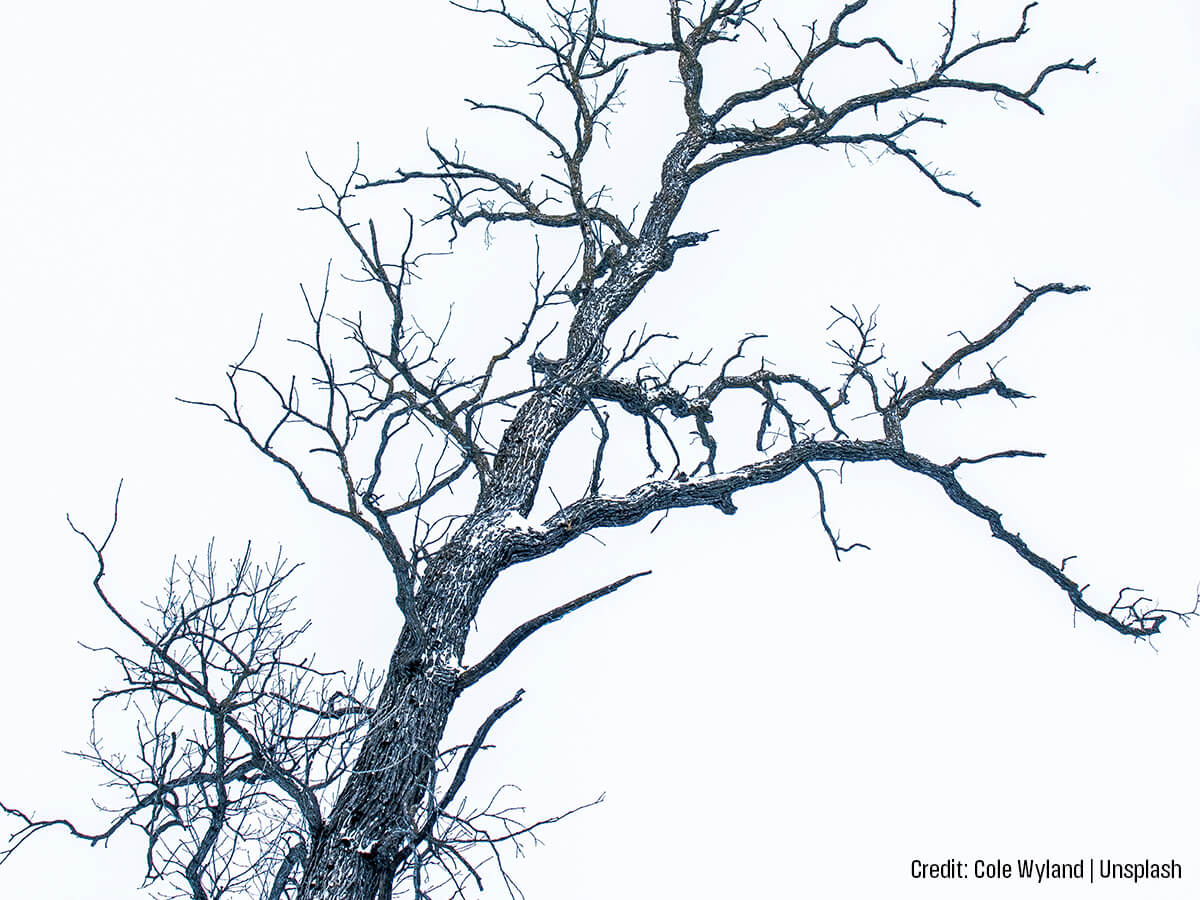
For many homes (and homeowners too for that matter), winter can feel like a time of suspended animation. Now that the world is seemingly snowed-in, your whole landscape can feel dormant and lifeless under all the snow and ice. While it can be very tempting to view winter as a time you can relax your vigilance over the yard, the truth is that mid-winter is actually an ideal time for some arboriculture assessment. Caring for your trees from fall and into winter is part and parcel of looking after their health as the seasons change. During winter in particular, your trees “hibernate” and shed their leaves, giving you a more unobstructed look at them. This lack of visual obstruction allows homeowners to perform a critical wellness check, spotting structural defects, dormant pests, and disease indicators that might otherwise be camouflaged under the canopy.
Conducting such a mid-winter inspection is a proactive measure that safeguards your property and the longevity of your trees. By identifying any potential risks now, when your tree is dormant, you can schedule remediation before the spring thaw brings new growth that an inspection might then disrupt.
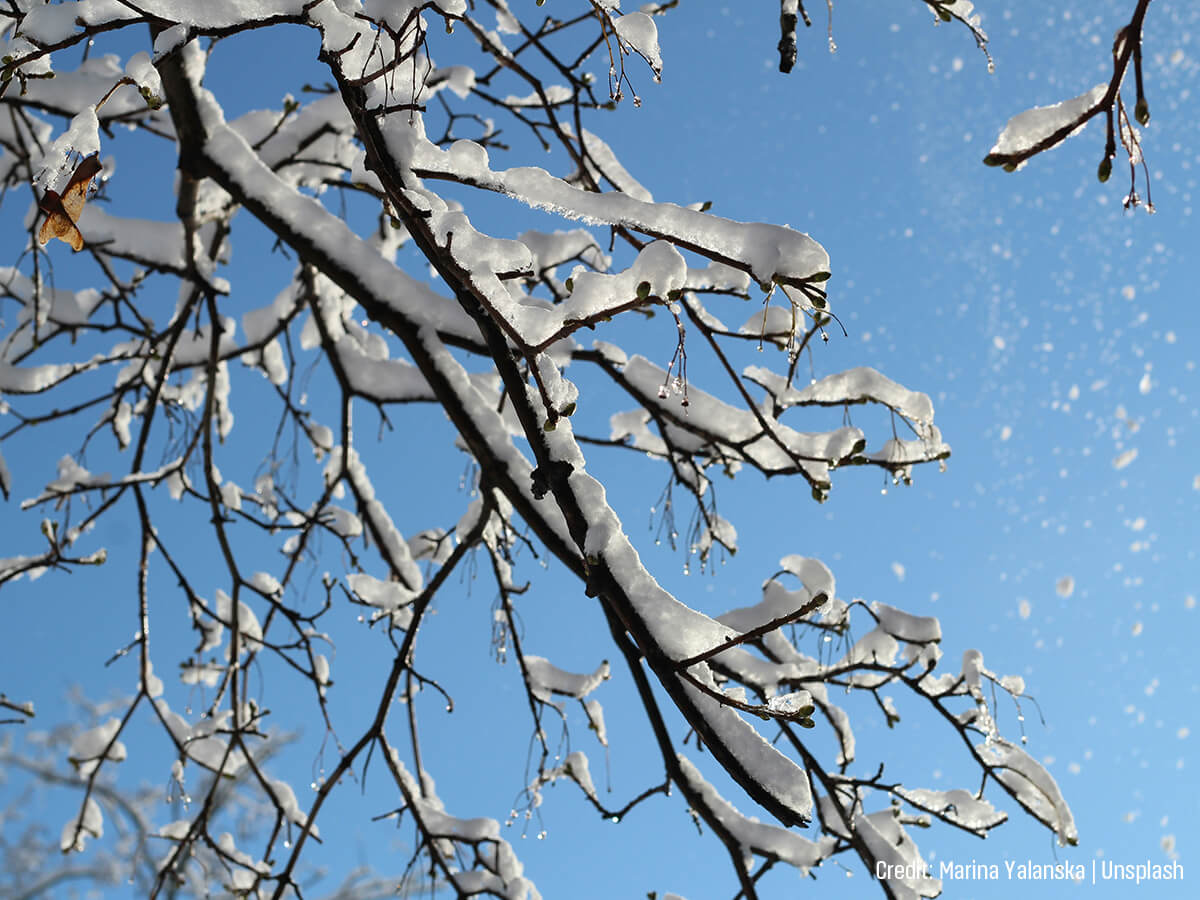
1. Assessing the Structural Architecture
Perhaps the most significant advantage of winter inspection is that it provides you with easy visibility of the tree’s framework. Without leaves, you can clearly see how branches interact with the trunk and with each other. This is the time to look for defects that compromise stability.
Co-dominant Stems and Included Bark
Look at the main trunk. Does it split into two or more stems of roughly equal diameter? This is known as a co-dominant stem structure. While not inherently bad, the union between these stems is worth paying attention to. A “U” shaped union is generally strong. However, a “V” shaped union often indicates a weak attachment. In tight “V” unions, bark gets trapped between the growing stems. This “included bark” prevents the wood fibers from connecting, creating a natural fracture point. If you see a deep crack or seam running down from a “V” crotch, the tree may be at high risk of splitting during high winds or heavy snow loads.
Frost Cracks and Vertical Seams
Also keep an eye out for any long, vertical splits along the trunk. Even small cracks can turn into large problems; therefore, it’s always prudent to address even those small cracks to keep your trees healthy. In Canada, we frequently see “frost cracks” or “sunscald,” particularly on thin-barked species like maples and fruit trees. These often appear on the south or southwest side of the tree which receive much of the sunlight in a day. These cracks occur when the sun warms the bark during the day, stimulating cell activity, followed by a rapid temperature drop at night which kills the active cells or causes the wood to shrink and split. While trees can often compartmentalize these wounds, extensive cracking can indicate internal structural weakness.
Hangers and Widow-Makers
Scan the upper canopy for hangers; these are broken branches that have detached but remain caught in the crown. As loose, heavy branches, they are immediate safety hazards and must be addressed immediately. A heavy accumulation of ice or a gust of wind can dislodge them and send them falling heavily to the ground below.
2. Investigating Pest Signals
Many common Canadian tree pests may be dormant in winter, but they often leave behind distinct calling cards. Mid-winter is an excellent time to scout for these signs, as you can get close to the trunk without navigating dense foliage, and the contrast against the grey bark or white snow makes identification easier.
The Emerald Ash Borer (EAB)
If you have ash trees, inspect the bark closely. The EAB is a devastating pest in many Canadian provinces. Look for “blonding,” which occurs when woodpeckers flake off the outer grey bark to feed on the larvae beneath, revealing the lighter, blond inner bark. Also, search for D-shaped exit holes, approximately 3 to 4 millimetres wide. These holes indicate where the adult beetle has emerged.
The Asian Longhorned Beetle (ALB)
This invasive pest targets hardwoods like maples, birches, and elms. Scan the trunk and major branches for perfectly round exit holes, roughly 10 to 15 millimetres in diameter. You might also see egg-laying sites, which look like shallow, chewed depressions or divots in the bark, often oval or round in shape.
Scale Insects
Scale insects can look like natural bumps on the bark, making them difficult to spot for the untrained eye. Magnolia scale, for instance, appears as white, waxy lumps on the twigs. If your tree looked sooty or sticky last summer, check the underside of the twigs now for these small, shell-like bumps.
Overwintering Egg Masses
Many defoliating insects lay eggs on tree trunks to survive the winter. Spongy moth (formerly gypsy moth) egg masses appear as tan, fuzzy patches roughly 3 to 5 centimetres long, often found on the sheltered side of trunks or underside of branches. Eastern tent caterpillar egg masses look remarkably different; they appear as a hardened, dark grey, styrofoam-like band that completely encircles a small twig. Identifying and removing these masses in winter can significantly reduce the population of leaf-eating caterpillars in the spring.

3. Identifying Fungal Infections and Disease
Fungi are persistent, invasive pests. Last year, an epidemic of butternut canker affected trees in Prince Edward Island; according to the P.E.I. Invasive Species Council, the disease has a 99% infection rate, which ought to be a warning for any fungal infection in general. Any signs of fungal infection ought to be considered indicative of internal issues that require professional assessment.
Black Knot
This is a common fungal disease affecting Prunus species, such as cherry, plum, and chokecherry trees. It presents as hard, black, charcoal-like swellings or “knots” on the twigs and branches. These knots can range from a few centimetres to over 30 centimetres in length. Winter is the best time to prune these out (cutting at least 15 to 20 centimetres back into healthy wood) because the fungus is dormant and less likely to release spores during the removal process.
Conks and Mushrooms
Inspect the trunk, particularly at the base, and the main branches for conks (bracket fungi) or old mushrooms. These are the fruiting bodies of decay fungi. The presence of a conk on the exterior usually indicates a significant column of rot on the interior. If you see large fungal brackets growing from the trunk, the structural integrity of the wood is likely compromised, and a risk assessment by a certified arborist is necessary.
Cankers
Cankers appear as sunken, dead areas on the bark, often surrounded by a ridge of callus tissue where the tree has tried to seal off the wound. In winter, without the distraction of leaves, these deformities are prominent. Multiple cankers can girdle a branch or trunk, cutting off the flow of nutrients.
4. Root Zone and Abiotic Stressors
The “wellness check” is not limited to the tree itself but extends to the environment immediately surrounding it. Winter brings its own set of abiotic (non-living) stressors.
Root Girdling and Heaving
Clear a small amount of snow from the base of the trunk to inspect the root flare; this is the area where the trunk widens and enters the soil. This flare should be visible; if the tree looks like a telephone pole going straight into the ground, it may be planted too deep, or there may be girdling roots strangling the trunk beneath the surface. Additionally, freeze-thaw cycles can cause soil heaving, which may lift young or shallow-rooted trees, exposing tender roots to freezing air.
Salt Damage
Trees located near roadways or walkways are susceptible to damage from de-icing salts. Salt spray can desiccate buds and twigs, leading to witches’ brooms (dense clusters of twigs) or dieback on the side facing the road. If you notice heavy salt accumulation, plan to flush the soil with water as soon as the ground thaws in spring to dilute the salinity.
Mechanical Damage
Winter is a season associated with snow removal machinery (and for good reason). Check the lower trunk for fresh wounds caused by snowplows, blowers, or shovels. Bark abrasion opens the door for pests and decay. If damage is found, you may need to install stakes or guards to define the tree’s perimeter more clearly for the remainder of the snow season.
5. Moving Forward
Once you have completed your inspection, categorize your findings. Small issues, like minor broken branches or accessible egg masses, can often be handled by the homeowner. However, signs of structural failure (such as deep cracks, co-dominant stems with included bark, or fungal conks on the main trunk) require the expertise of a certified arborist.
Winter is arguably the best time for remedial pruning. Because the tree is dormant, the risk of transmitting diseases (like Oak Wilt or Dutch Elm Disease) is significantly lower, and the wound closure process can begin immediately when spring growth starts. Furthermore, the frozen ground allows heavy equipment to access the tree without compacting the soil or tearing up the lawn.
Winter might be a time when the world around you slows down, but that dormancy isn’t the only element of note of the season; it’s also the most critical time for preventative tree care. Scanning for structural defects and pests now goes a long way toward safeguarding your property against spring storms. Proactive inspection ensures your trees remain resilient, valuable assets, ready to flourish as soon as the snow melts.
Inspecting your trees for any winter risks now is key to helping them thrive in spring. Dave Lund Tree Service is on hand, ready to offer certified care for your trees to give them that helping hand to start strong next spring. Call (905) 884-0511 today to schedule a professional assessment and secure your property before the thaw.