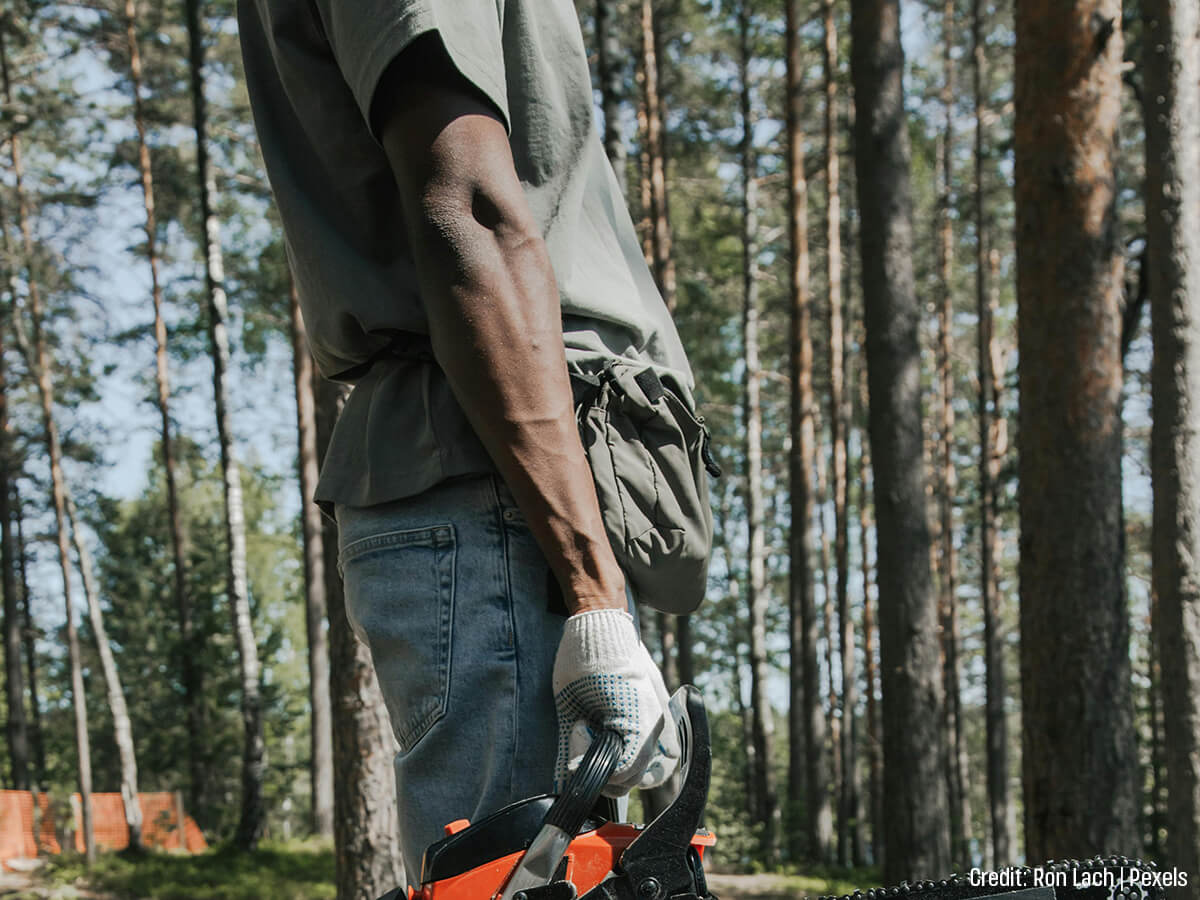
There’s no denying a tree adds a certain je ne sais quoi to your home. They’re beautiful and majestic additions to your property, and the right species can even provide some shade to make your home that much more comfortable and appealing. And like other elements of your landscape, it’s only natural to want to care for your trees as you would your lawn and hedges and flowers. Armed with a new chainsaw from the local hardware store and a sunny weekend, the temptation to just tidy up an overhanging branch or do some mulching on your own can be a strong one.
But a tree is not a hedge. A mature tree is a complex, heavy, and powerful biological system. Attempting to care for it without professional training is not just a gamble with your property; it can have serious consequences for the tree and for your welfare. The dangers of DIY tree care are not always clear-cut, and can extend beyond the obvious risks like falling off a ladder or making a mistake with removing a seemingly-removable branch. What seems like a cost-saving measure can quickly escalate into a financial and logistical nightmare.
This is where a certified arborist comes in. An arborist is not just a tree cutter; they’re a veritable tree expert, a highly trained specialist who understands the biology, physics, and safety protocols required to properly manage trees. This training and expertise make arborists an absolute must for your trees’ health (and for your own if it comes to it). Before you rev up that chainsaw, consider these hidden dangers that reveal why hiring a professional is the smarter, safer, and ultimately more economical choice.
1. The Peril of Hidden Decay and “Widowmakers”
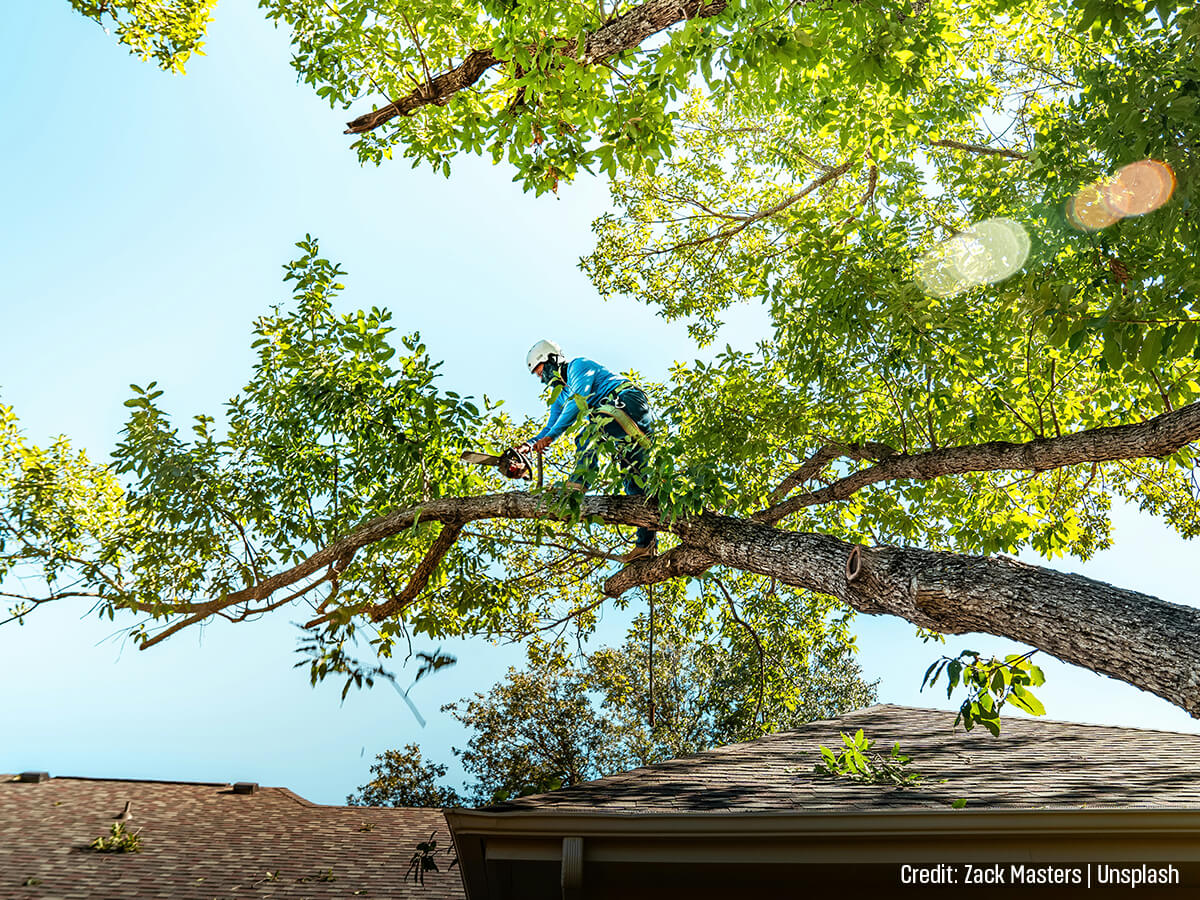
The most immediate danger is, of course, gravity. But it’s not the fall you predict; it’s the one you don’t. A homeowner looks at a branch and sees leaves and bark. An arborist is trained to see subtle signs of structural weakness: a slight bulge in the bark, the presence of a specific fungus, or a weak “V” shaped union.
You might place your ladder against a branch that looks solid, only to have it snap because it’s rotten from the inside out. Even more sinister are the “widowmakers” (dead, detached branches caught in the upper canopy) just waiting for a gust of wind or the vibration of your saw to fall. A homeowner working below is often completely unaware of the multi-kilogram hazard lingering metres above their head. An arborist knows to conduct a full hazard assessment before even starting the work, identifying and safely removing these threats first.
2. The Invisible, Lethal Threat of Hydro Lines
This is perhaps the most catastrophic hidden danger. Every homeowner knows not to touch a power line, but few understand the true risk. Electricity can arc, or jump, from a high-voltage line to a conductive object (such as a metal ladder or a sappy, wet tree branch) without ever making direct contact.
The safe clearance distance is often much greater than people assume, sometimes 3 metres or more. Trying to just sneak under a hydro line to get at a branch can be a risky prospect for a layman. Certified arborists are specially trained and qualified to work near utility lines. They have the proper non-conductive equipment and understand the protocols to work safely, and employ a level of coordination that is entirely outside the scope of a DIY project. No amount of money saved is equal to the risk of electrocution.
3. The Deceptive Physics of Falling Limbs
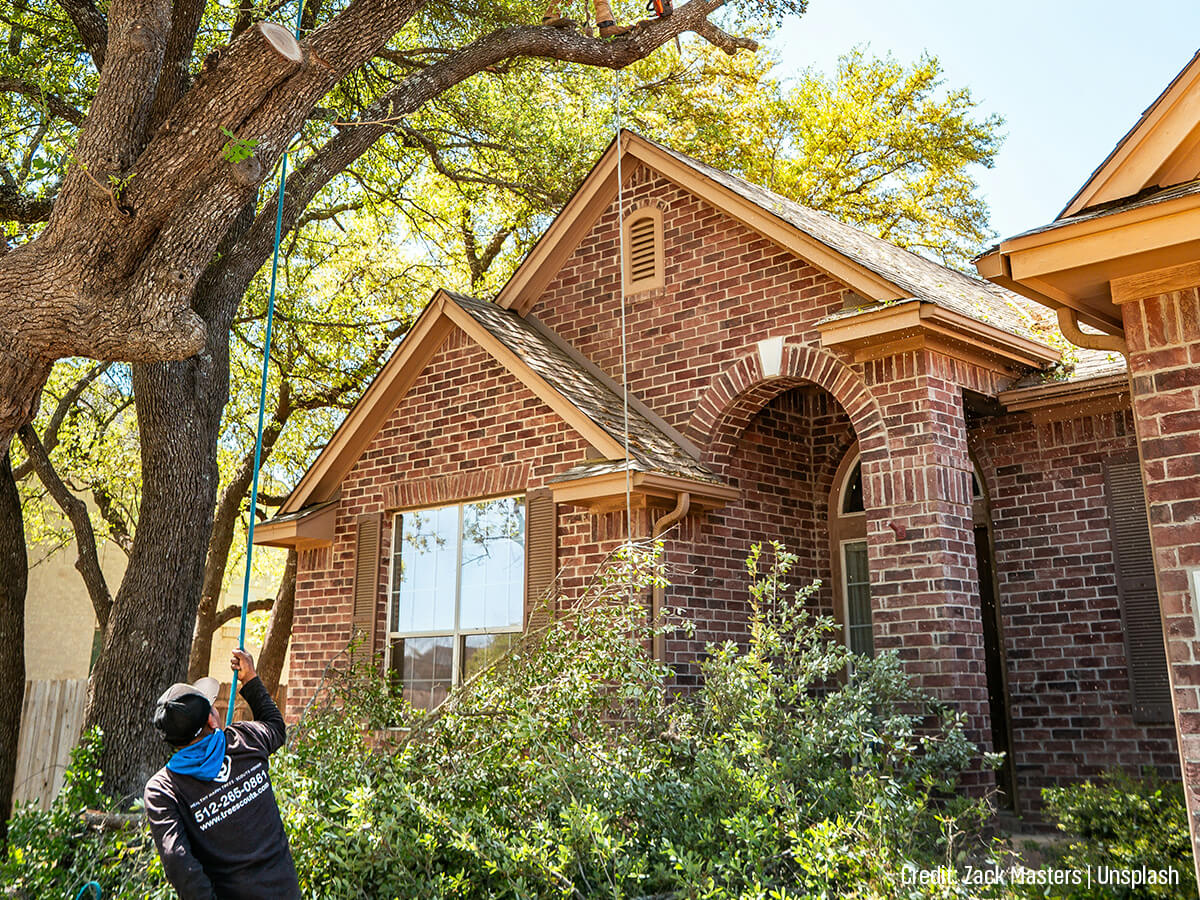
A homeowner often severely underestimates the forces at play; the unfortunate accounts of people injured by falling limbs (as was the case earlier this year in Barrie) are proof that you can never be too careful when dealing with your trees. You can’t simply cut a 5-metre limb and expect it to fall straight down; the physics are far more complex than that. The weight of the limb, which can be in the range of hundreds of kilograms, combined with the angle of the cut can create immense leverage.
When the branch is partially cut, it can suddenly split, swing sideways, or “kick back” at the cutter, smashing into the ladder or the person on it. If it does fall, its trajectory is unpredictable. It can swing into your house, crushing a roof or smashing a window, or fall onto your neighbour’s property, destroying a fence or a car. Arborists use sophisticated rigging systems (consisting of ropes, pulleys, and friction devices) to control the descent of every piece, carefully lowering them to the ground precisely and safely. This control is the difference between a clean job and a disaster.
4. The Long-Term Damage of Improper Pruning Cuts
Here is a danger that is almost entirely hidden, as the consequences may not appear for years. To a homeowner, a tidy cut is often a flush cut, made right up against the trunk. This is actually one of the most damaging things you can do to a tree.
Trees have what’s known as a branch collar, a raised area of tissue at the base of the branch that contains the cells needed to heal a wound. Cutting into this collar creates a large, gaping wound that the tree cannot properly seal. This becomes a superhighway for pests, fungi, and rot, which will then move into the main trunk. Conversely, leaving too long of a “stub” allows that stub to die, rot, and channel decay back into the tree. An arborist knows exactly where to make the cut to honour the tree’s natural defence system, ensuring it can heal quickly and protecting it from future infection.
5. The Critical Misuse of Powerful Equipment
A chainsaw is an incredibly efficient tool, if one that requires care and training to use safely. In the hands of an amateur, the risk of kickback (a violent, upward thrust of the saw) is extremely high and can occur faster than human reaction time. Furthermore, most homeowners lack the mandatory personal protective equipment (PPE), such as specialized chainsaw trousers, a forestry helmet with a face shield, and steel-toed boots.
Even a simple ladder can cause injury if you don’t entirely know what you’re doing. Placing it on soft, uneven lawn, or failing to secure it properly against a round, shifting trunk, is a recipe for a fall. An arborist arrives with commercial-grade, specialised equipment, from aerial lifts to advanced climbing gear, and possesses the rigorous training to use it all safely.
6. The Misdiagnosis of Pests and Disease
When a tree’s leaves turn a sickly colour or start to drop, the homeowner’s first instinct is often to guess. Is it a fungus? A lack of water? An insect? They might buy a generic “all-in-one” spray or fertiliser from the garden centre, hoping for the best.
This is like taking medicine for a cough when you have a broken leg. You are not treating the root cause, and in many cases, you can make it worse. An arborist is essentially a tree doctor who can accurately diagnose the problem. They can tell the difference between a simple nutrient deficiency in the soil and a serious vascular disease like Dutch Elm Disease. Applying the wrong treatment wastes money and, more importantly, wastes the precious time the tree has to be saved.
Why Hiring an Arborist Saves You Time and Money
It’s clear that the risks of DIY tree care are significant, but the benefits of hiring a professional go beyond just safety. They directly impact your two most valuable resources: your time and your money.
Saving Time:
A task that would consume an entire weekend for a homeowner (a weekend that you now know would involve risk, stress, and hard labour) is often a half-day’s work for a professional crew. They have the right equipment, the expertise, and the manpower to work efficiently. More importantly, you save the future time you would have spent dealing with the consequences of a DIY mistake: time on the phone with insurance adjusters about a hole in your roof, time spent trying to nurse a sick tree back to health, or, in the worst-case scenario, time spent recuperating from an accident.
Saving Money:
This is the most common misconception. An arborist’s invoice may seem like a large expense, but it is fractional compared to the potential costs of a DIY project gone wrong.
Property Damage: The cost of repairing a damaged roof, fence, or your neighbour’s car will dwarf the cost of a professional pruning.
Personal Injury: A serious injury can lead to lost wages and medical bills far exceeding any potential savings.
Tree Health: That “free” pruning job could kill your tree. The cost of removing a large, dead tree is exponentially higher than the cost of maintaining a healthy one.
Property Value: A healthy, well-maintained mature tree is a significant financial asset, adding thousands of dollars to your home’s value. A sick, damaged, or “topped” tree is a liability.
Insurance: A certified arborist carries full liability and WCB (Workers’ Compensation Board) insurance. If an accident does happen on their watch, you are completely protected. If you injure yourself or damage your own property, that cost comes directly out of your pocket.
Your trees are a living legacy, but a misplaced desire to save a few dollars can put them, your property, and your personal safety at risk. Once you’ve identified the telltale signs you need an arborist’s help, it’s imperative you contact one immediately, for the sake of your own safety and peace of mind as much as getting the job done before the tree can come to harm. Hiring a certified arborist to handle a tree-related task for you is not an expense; it’s an investment in the health, beauty, and safety of your home.
When you need a hand giving your trees the care they deserve, it’s vital you turn to the right arborists. Dave Lund Tree Service has 45 years of experience providing tree care for clients like you, and we’re only too happy to put ourselves at your service. Give us a call now at (905) 884-0511 and get the help you need to care for your trees properly.